Digital Signage News November

This is an article about why companies should consider adding AI. It discusses the benefits of AI, such as efficiency, cost-effectiveness, scalability, precision, and innovation. It also addresses concerns about data security and accuracy. The article concludes that AI can be a valuable tool for businesses, but it should be implemented with care.
Training is usually the very last consideration but with AI, it moves up much higher in the stack. 22Miles is expert and more experienced than most with AI, so good advice
To embrace AI or not to embrace – that is the question facing many companies today. Should they fully implement artificial intelligence as an indispensable tool in their data analysis arsenal or remain cautiously undecided, grappling with uncertainty and hesitance? Let’s explore the benefits of incorporating AI training using company data.
Today, the seamless integration of AI into our daily work life, exemplified by read.ai’s accompaniment to various virtual meetings on platforms such as Zoom, Teams, or Google Meet, has become undeniably effortless. The advantages are unequivocally apparent. However, one cannot overlook the potential quandaries that arise when read.ai inadvertently records a confidential gathering, encompassing proprietary data, and consequently preserves it indefinitely in an online domain.
Therefore, the way AI is employed assumes a paramount position, necessitating meticulous consideration.
Let us commence by examining the factors that render AI indispensable. Artificial intelligence, with its unparalleled capabilities, offers an exceedingly efficient avenue to automate a myriad of tasks, thereby liberating employees from mundane responsibilities. By way of example, chatbots orchestrated by AI have evolved into indispensable components of most customer support teams, alleviating the burdensome and repetitive obligations associated with gathering information or initiating the process of filing a complaint. This in turn empowers human personnel to dedicate their precious time and expertise to the provision of extraordinary customer experiences and the proactive resolution of issues at hand.
In today’s data-driven business landscape, companies are increasingly recognizing the value of industry-specific data training. This customizable training approach is tailored to the unique needs of a particular industry, products, and businesses. By harnessing the power of tailored data, businesses can optimize their performance and achieve optimal results.
However, it is important to address concerns that come with AI implementation. Data security breaches are a key apprehension, as AI heavily relies on the collection and processing of vast datasets. Additionally, the quality and accuracy of AI-generated insights can be influenced by biased or incomplete data. Addressing these concerns requires choosing a reputable and reliable backend vendor.
Considering the significant impact of data-driven decision-making in business, 22Miles provides AI Assistant solutions carefully trained to align with your company’s specific data requirements. With our cutting-edge AI Assistant, businesses can revamp their support experiences, fostering exceptional interactions for both customers and employees. By incorporating our AI Assistant, you can expect heightened efficiency in customer communications and a substantial uplift in overall operational productivity, leading to improved bottom-line results.
At 22Miles, we offer diverse AI training solutions to cater to various business needs. Our offerings include a 60-hour AI training program tailored for existing 22Miles applications, as well as customizable AI training options meticulously designed for businesses of all scales.
In conclusion, the decision to integrate AI into your company to address specific business problems is a strategic one that can offer significant advantages, but it must be made with careful consideration of various factors. When considering whether to use AI, it’s imperative to balance the potential benefits with the potential risks, particularly concerning data security and accuracy.
AI has the power to enhance efficiency, productivity, and competitiveness by automating tasks, offering valuable insights, and driving innovation. However, to ensure a successful AI integration, it is vital to address data security and accuracy concerns. Data is the lifeblood of AI, and maintaining its integrity and protecting it from unauthorized access or breaches is paramount. Employing robust security measures, encryption, and following best practices in data management are essential to mitigate these concerns.
In summary, using AI for your company to solve business problems can be a wise decision, but it should be made with caution and a clear focus on data security and accuracy. Partnering with an experienced AI company is essential to leverage the potential of AI technology while mitigating risks. Their expertise can guide you through the nuances of AI implementation, from selecting the right algorithms to managing data and addressing any ethical considerations. By doing so, you can position your company for success in an increasingly AI-driven business landscape.

Situation

digital signage amusement park
Major amusement park in Mexico needed a way to communicate all of its featured attractions to customers as they entered the park.
Solution
165 inch 4K video wall positioned outside which uses dynamic content managed by CMS.
Notes:
From Alveni – It’s the holiday season and tech teams keep working hard for loyal customers. Here is a 165” 4K videowall in Xel-há park, Riviera Maya, Mexico. The complete solution also includes Provisio’s Sitecaster CMS to easily update content. The videowall located in the visitors’ transfer area and allows Xel-há to engage customers when they arrive at the park and show all the amazing activities that the park offers! It’s great to work with companies that integrate technology into their operation to enhance the customer’s experience.
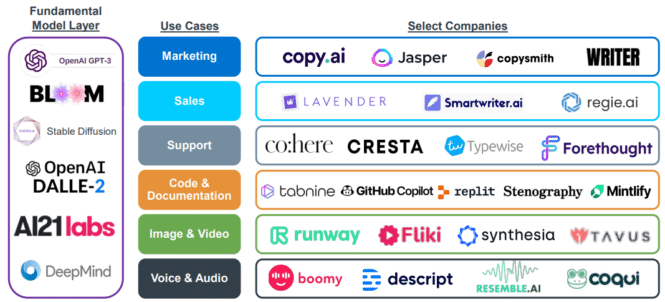
Guest writeup on Sixteen-Nine.net — read the full post. The original post is on Intuiface website
The world of generative AI is on fire. Super-powered algorithms are writing code, crafting stories, and creating images that would challenge a Turing test. Under the covers, deeply complex machine-learning processes are burrowing through billions of human-created words, graphics, and code, getting more intelligent and more creative by the minute.
And since these algorithms are fully accessible via Web API, they are easily incorporated into your Intuiface experiences.
Let’s spend some time understanding the world of generative AI their value for digital signage, and how you can use them in Intuiface
Generative Artificial Intelligence (AI) is a subset of machine learning that enables computers to create new content – such as text, audio, video, images, or code – using the knowledge of previously created content. The output is authentic-looking and completely original.
The algorithms creating this unique content are based on models that reflect lessons learned about a particular topic. These lessons are not programmed; instead, the algorithms teach themselves via a mechanism known as deep learning, refining their models as more and more data about a topic comes in. Among the many fascinating aspects of this technology is the flexibility of the learning engine, which is adaptable to all aspects of human expression. Both the aesthetics of an image and the formalism of JavaScript code are achievable!
The most well-known example of generative AI is GPT – currently known as GPT-3.5, the latest evolution of the third-generation language prediction model in the GPT series. Created by OpenAI, it’s an algorithm that can be adapted to create images and anything with a language structure. It answers questions, writes essays, develops summaries of longer text items, writes software code, and even translates languages.
To achieve this ability, OpenAI provided the GPT model with around 570GB of text information from the internet. Want to try it out? Head to ChatGPT, create a free account, and start a conversation.
For image generation, the best-known options are DALL·E (based on GPT), Midjourney, and Stable Diffusion. Like ChatGPT, these services take natural language as input, but their output is images. The output can be in any requested style – from art-inspired themes like cubism or impressionism to completely realistic images that look like photographs but were created by an algorithm. Now you can indulge your desire to see “Yoda seated on the Iron Throne from “Game of Thrones” at home plate in Fenway Park.” (We used Stable Diffusion to generate the image below with that exact text.)
Generative AI can be an excellent companion technology for creating unique and engaging digital signage experiences. With it, digital signage can dynamically create and display real-time content that perfectly fits the context. This content can be influenced by user behavior or external data sources, from weather forecasts to real-time prices.
Examples include:
The most significant hurdle is performance, particularly for image generation, as today’s Generative AI solutions are not (yet) instantaneous. Depending on the complexity of the request and the complexity of the desired result, image generation can even take a few seconds. As a result, signage must be proactive in the content request to ensure there is no visual latency.
By adopting interactive digital signage, which provides insight into the user’s preferences, you can go further with Generative AI. Now you are not just limited to an external context; you have intimate knowledge of your audience and can communicate accordingly.
By “interactive” we mean any type of human-machine conversation, both active and passive. Active options include touch, gesture, and voice, while passive options include sensors and computer vision. For all modalities, in combination with context and on-screen content, digital signage can clearly identify a user’s interests.
Examples include:
For any natural language scenario, the designer – or the user – could choose to dynamically transform the text to speech (TTS) using either OS-specific services or with the help of generative AI voice services like VALL-E.
In all cases, the creative team is freed from having to anticipate the broad range of potential users/scenarios/requirements. They can just rely on a Generative AI resource to do the heavy lifting in real time.
Geoff Bessin is Chief Evangelist at Intuiface, which means he thinks about the intersection of digital interactivity with signage and presentations. Twitter – @geoffbessin

From ExploreKeyser blog May 2021
Digital signage solutions are everywhere from advertising billboards at the mall, to screens in offices displaying important company information. Digital Signage buying decisions are no longer a simple matter. It is now more complex than just picking an LCD display and determining how you want it to hang on the wall.
Here are a few components that can help you make more informed decisions on your next purchase.
As always what works for one person may not work for another. There are many factors to consider when choosing the right digital signage display including pricing, durability, and more. Here are a couple of different screen types, and the best scenario to use each;
Tablet or iPads: These user-friendly multimedia touch screens work best when viewers are close to the screen. For example, these digital signs are perfect outside a meeting room, in an elevator, or next to a product in a supermarket.
Monitors: These digital displays are best if you are looking to display anything that is between 17 and 32 inches. If you need something larger you are better off getting something TV-like.
Non-smart TVs: While these are cost-effective large screens, they do have limitations.
Consumer TVs: These displays are recommended only for personal use. This means they are designed for less display time. At most, they can run for 8 hours a day. If you use these screens 24/7 they will lose quality over time, degrading the customer experience.
Commercial TVs: The biggest reason to buy a commercial screen is that they are specifically designed for long use periods. They are designed for 24/7 playlists.
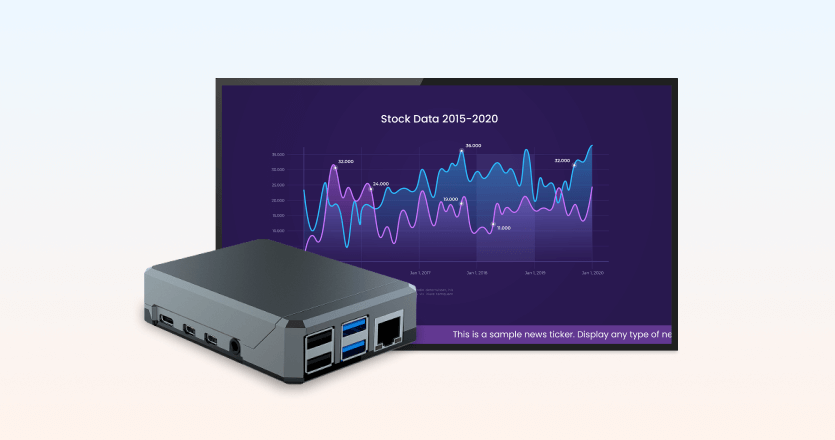
A media player or device connected to a monitor is what makes the monitor capable of using digital signage software. Here are the different types of media players:
Consumer Media Players: These are designed for home use not to withstand 24/7 use. If in a commercial setting, the digital signage can get damaged or stop working altogether. Consumer media players are typically made from plastic which makes the cost cheaper. Options for mounting are also limited.
Commercial Media Players: These are designed to operate for long periods of time without getting damaged. Commercial media players also have faster processing power and can handle more dynamic content like 4K videos.
Industrial Media Players: These have the same level of computing, but the key difference from the commercial options is the extra features that help withstand the environment. Industrial media players are built with metal to protect the hardware inside from moisture, dust, heat, and cold.
You want whatever you are displaying to run smoothly and without interruption. The performance of your device is a big part of that. When it comes to performance here is what to look for:
SOC/CPU (System On Chip/Processor): The SOC is responsible for much of the heavy lifting and processing power.
GPU (Graphics Processing Units): The CPU is responsible for the graphing processing power. You also will want to look for things like video decoding, video output, HDMI, and support for HDR.
Storage Drive: It is important to note that your storage drive will need enough space for caching media. In general, you want to get 8GB to 16GB.
RAM (Random Access Memory): RAM is needed to keep general user experience running at a high level.
Interactive content requires one to roll their sleeves up and put forth a bit of work to bring to life. Network administrators or owners will need to secure hardware capable of powering such interactive content (see media players above), and also digital signage software to connect everything together for the content to run flawlessly.
A content management system with an open API will most always be the best choice for nearly all interactive digital signage projects. However, it is important to confirm the solution is also secure and reliable. Digital signage applications without security can become targets for tampering by hackers, so it’s truly important you take the extra steps to ensure your functionality is secured.
Finally, the digital signage platform needs content to be interacted with. This dynamic content takes respective forms, highly dependent on the nature of the digital signage solution selected. Interactive billboards or video walls, for instance, are likely going to showcase interactive content provided by a media buyer or advertiser looking to place a specific marketing or promotional campaign for their larger customers.
With indoor displays like wayfinding kiosks or digital menu boards, interactive content is likely a concern to be handled by the network owners themselves. This isn’t to say that the content must be created in-house or that you’re out of luck. A number of digital signage content providers specialize in providing all-in-one content or templates that can be tailored to your specific needs.
It is critical you find an installer that offers care and maintenance for the digital signage products that you install. Support through a help desk and network of local installation technicians is important to have at your fingertips should you need it. Quality installation work and managing the manufacturers’ warranty fulfillment, as needed, will be crucial for the digital hardware. An installation is not only a commitment to ensure that your digital signage solution performs to specifications, but also delivers an exceptional ROI.
Post-deployment of your digital signage is a continuing process to keep a close eye on. Your signage installer/integrator/partner should continuously provide IT-related technical support and training to the digital signage end user.
It is often expected that the customer will eventually be held responsible for coordinating with the appropriate tech support teams for device management, so a lot of hand-holding is needed in order to walk before you run with your application.
Choosing the best digital signage solution and getting it to work properly is all about understanding the needs. The days of digital signage only being available to a few are now over. With Keyser, we can assist you with picking the right hardware and get it up and running.
We look forward to seeing what decision you make and are here to help you on the way. If you are looking for some help or advice on anything you read here or want to discuss in more detail, you can reach us at sales@explorekeyser.com
News is the DSE show is to return in 2022.

questex dse
Highlights
Insight
Questex Enlists Brad Gleeson, Digital Signage Magazine and DSE Founder, as Industry Advisor and Executive Producer; Advisory Board Unveiled
NEW YORK, July 06, 2021 (GLOBE NEWSWIRE) — Questex today announces that DSE will take place March 21-23, 2022 in Las Vegas at the Las Vegas Convention Center. In support of Questex’s strategy to expand the DSE concept and end-user audience, the conference and expo will take place concurrently with the Bar & Restaurant Expo (formerly Nightclub & Bar Show).
DSE has been the leading event for the digital signage industry for 15 years before Questex acquired the assets in early 2021. Questex will build on that legacy as the preeminent event and digital platform for the digital signage industry, showcasing innovations in technology, market applications and creative educational content. Questex will combine its capabilities and experience as the leading information and events company focused on the experience economy with input from the industry including past sponsors, exhibitors and attendees to deliver an updated and renewed event for the industry going forward.
DSE also builds on Questex’s other audiences and platforms in Hotels, Hospitality, Travel, Healthcare, Entertainment, Education, Sensors and communications Technology – key end user markets for digital solutions and experiences.
Marian Sandberg, VP & Market Leader, DSE said, “Our research shows that the industry strongly desires an event that brings digital signage suppliers and solution providers together with designers, buyers and stakeholders in a wide range of adjacent and vertical markets. The conference program will be designed to attract and engage a broader audience, focused on innovative applications and outcomes, while the exhibitor list will expand beyond digital signage equipment providers to those who use digital technology to design and implement experiences that attract, inform, educate and entertain. Our goal is to design an event that becomes the foundation for a digital community platform and calendar of events that encompass the interests and goals of a broad community interested in how digital media technology can enhance lives and experiences in the physical world.”
Questex will be drawing from the expertise of digital signage industry veteran, Brad Gleeson, Co-Founder and Managing Partner of TargetPath to relaunch the event. Gleeson is a veteran of the technology-based business start-up world and has a distinguished career establishing effective go-to-market strategies. He was founder of Digital Signage Magazine, the DIGI awards, the first digital signage tradeshow now DSE, and other initiatives that helped build the foundation of the digital signage industry.
DSE Advisory Board
Today, DSE also officially unveils its Advisory Board. The mission of the board is to share expertise and insights about technology, digital-out-of-home and experiential events. The Advisory Board is a mix of industry veterans and new industry influencers in digital signage, digital-out-of-home and digital media experiences.
The Advisory Board includes:
Check back here for additional details regarding the conference schedule and registration in the coming months.
About Questex
Questex brings people together in the markets that help people live better: travel, hospitality and wellness; the industries that help people live longer: life science and healthcare; and the technologies that enable and fuel these new experiences. We live in the experience economy – connecting our ecosystem through live events, surrounded by data insights and digital communities. We deliver experience and real results. It happens here.
Media Contact
Marian Sandberg
VP & Market Leader
msandberg@questex.com
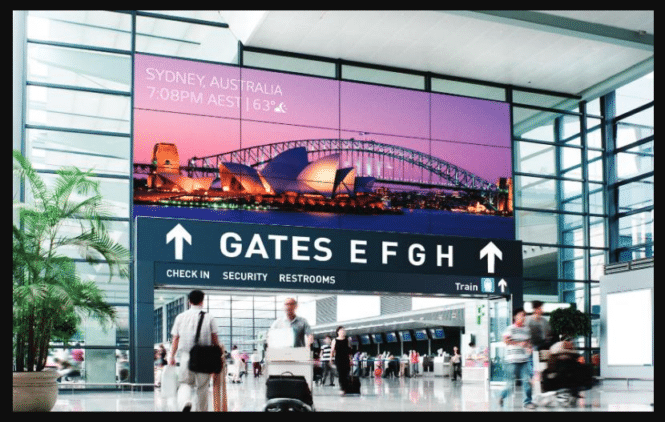
Nice article by AcquireDigital
In today’s modern airports, digital signage plays a crucial role in enhancing the overall passenger experience and maximizing the benefits for both travelers and airport operators. Understanding the importance of digital signage in airports is essential to fully capitalize on its potential.
Modern airports are vast and complex spaces, bustling with activity and constantly evolving. With countless passengers navigating through terminals, it is crucial to provide clear and concise information to ensure a smooth and efficient travel experience.
Digital signage serves as a dynamic communication tool that can disseminate real-time information and guide passengers in a clear, engaging, and visually appealing manner.
When it comes to the role of digital signage in modern airports, its impact goes beyond just displaying information. It acts as a virtual concierge, offering wayfinding and directional assistance to travelers. With its ability to display maps, highlight key areas, and provide step-by-step instructions to various amenities, such as baggage claim, security checkpoints, and boarding gates, digital signage becomes an indispensable tool in helping passengers navigate the complex airport environment.
Moreover, digital signage plays a crucial role in keeping passengers informed. It can display important announcements, updates on flight schedules, and any changes or delays, ensuring passengers stay up-to-date and reducing confusion or frustration. This real-time communication helps create a seamless travel experience and enhances overall passenger satisfaction.
One of the primary benefits of airport digital signage is its ability to enhance passenger experience. The engaging visuals, coupled with interactive features, captivate and assist travelers, alleviating stress and uncertainty during their journey. Imagine a passenger glancing at a digital signage display and finding not only the information they need but also interactive elements that allow them to explore the airport’s facilities, services, and even local attractions. This level of engagement creates a positive impression and fosters a perception of efficiency and attentiveness from the airport authority.
Additionally, digital signage can also be used as a platform for advertising and revenue generation. Airports can partner with brands and businesses to display targeted advertisements, promotions, and offers on digital signage screens. This not only helps generate additional revenue for the airport but also provides valuable information and opportunities for passengers. These DOOH platforms can integrate with third-party ad networks like Clearchannel to automatically pull advertising inventory.
In conclusion, digital signage has become an essential tool in modern airports. Its ability to provide real-time information, assist with wayfinding, enhance the passenger experience, and even generate revenue makes it a valuable asset for both passengers and airport authorities. As airports continue to grow and evolve, digital signage will play an increasingly important role in ensuring a seamless and enjoyable travel experience for all.
While recognizing the importance of digital signage, it is essential to understand the key features that contribute to its effectiveness in airports. These features include:
Interactive Maps and Wayfinding
Interactive maps incorporated within digital signage allow passengers to navigate through the airport efficiently. By providing intuitive directions and highlighting essential areas, digital signage empowers travelers to find their way seamlessly.
Whether it’s locating restrooms, dining options, or duty-free shops, interactive maps help passengers make informed decisions, saving time and reducing stress.
Imagine a weary traveler arriving at a bustling airport, unsure of where to go. With airport digital signage, they can simply look up at the screens strategically placed throughout the terminal and find their way with ease. The interactive maps not only provide clear directions but also offer additional information about nearby amenities, such as the distance to the nearest coffee shop or the estimated walking time to the gate.
Furthermore, these interactive maps can be customized based on the passenger’s preferences and needs. For example, families traveling with young children can select a map that highlights family-friendly facilities like play areas or nursing rooms. Business travelers, on the other hand, can choose a map that focuses on business lounges and conference facilities. Interactive maps can also extend across to touch-screen kiosks to allow passengers to scan their boarding pass to find real-time flight information and directions to their gate.

Real-Time Flight Information
Keeping travelers updated about flight schedules, gate changes, or delays is crucial. Digital signage provides real-time flight information, enabling passengers to be well-informed and make necessary adjustments to their travel plans.
Displaying flight status, arrival and departure times, and even estimated wait times at security checkpoints contribute to a smoother travel experience for passengers.
Picture this: a passenger is rushing to catch a connecting flight but is unsure if it has been delayed. With airport digital signage, they can quickly glance at the screens scattered throughout the terminal and find up-to-date information about their flight. This real-time flight information allows them to plan accordingly, whether it means hurrying to the gate or taking a moment to grab a bite to eat.
Furthermore, airport digital signage can also provide additional information related to flights, such as weather conditions at the destination or any important announcements from the airline. This ensures that passengers are well-prepared and have all the necessary information at their fingertips.
Advertising and Promotional Content
Another key feature of effective airport digital signage is its ability to display advertising and promotional content. This not only generates revenue for the airport but also provides relevant information to passengers about current offers, services, and local attractions.
By strategically placing promotional content throughout the airport, digital signage can influence passenger behavior and encourage engagement with various concessions and amenities.
Imagine a passenger waiting at the gate, looking for something to do during their layover. With airport digital signage, they are presented with enticing advertisements for local attractions, such as museums, tours, or shopping centers. This not only helps promote the local economy but also enhances the overall travel experience for passengers.
In addition to promoting external businesses, airport digital signage can also be used to showcase the airport’s own services and facilities. For example, it can highlight the airport’s VIP lounges, spa services, or even exclusive shopping experiences. By effectively utilizing digital signage for advertising and promotional purposes, airports can create a vibrant and engaging environment for their passengers.
Implementing digital signage is just the beginning; to truly maximize its benefits, certain strategies need to be adopted:

Utilizing High-Quality, Engaging Content
The success of digital signage relies on the quality and relevance of the content displayed. Captivating visuals, clear messaging, and engaging multimedia can capture the attention of passengers, ensuring they absorb the information being shared.
Imagine walking through an airport and being greeted by a vibrant digital display showcasing stunning images of exotic destinations. The vivid colors and breathtaking scenery immediately transport you to another world, igniting your desire to explore new places. As you continue your journey, you come across another digital sign that showcases mouthwatering images of delicious food options available at the airport’s restaurants. The carefully curated content leaves you salivating and eagerly anticipating your next meal.
Collaborating with professionals in graphic design and content creation can provide the expertise needed to create visually stunning and impactful displays. These experts can help craft compelling narratives that resonate with passengers, ensuring that the digital signage becomes a memorable part of their travel experience.
Ensuring Clear and Readable Information Display
Digital signage should prioritize clarity and readability. Utilizing appropriate font sizes, contrasting colors, and concise wording is essential for conveying information effectively, particularly in environments with varying lighting conditions.
Imagine finding yourself in a bustling airport terminal, surrounded by a sea of people and a cacophony of sounds. In such a chaotic environment, it becomes crucial for digital signage to cut through the noise and deliver information clearly and efficiently. By using bold, easily readable fonts and contrasting colors, the signage becomes a beacon of clarity amidst the chaos.
Regular maintenance and testing of the displays are also crucial to ensure optimal performance and readability throughout the airport. Technicians diligently monitor the screens, adjusting brightness levels, and resolving any issues that may hinder the readability of the content. This meticulous attention to detail guarantees that passengers can always rely on digital signage to provide them with the information they need.
Incorporating User-Friendly Interactive Features
Intuitive user interfaces and interactive features contribute to enhanced usability and a positive passenger experience. Incorporating touchscreens, gesture recognition, or even voice commands can make it easier for travelers to navigate digital signage and access relevant information quickly.
Imagine approaching a digital sign that not only displays flight information but also allows you to interact with it. With a simple touch on the screen, you can access real-time updates about your flight, including gate changes and delays. The user-friendly interface guides you effortlessly through the options, ensuring a seamless experience.
Furthermore, providing multilingual options and clear instructions on how to interact with the displays can accommodate a diverse range of passengers. Travelers from all over the world can easily navigate digital signage, regardless of their language proficiency. Clear icons and intuitive gestures eliminate language barriers, ensuring that everyone can benefit from the information presented.
As technology continues to evolve, digital signage in airports is expected to embrace new trends and innovations. Some of the future trends to look out for include:
This level of personalization enhances customer engagement and satisfaction, ultimately maximizing the benefits of airport digital signage.
In conclusion, the importance of airport digital signage cannot be overstated. By effectively utilizing interactive maps, real-time flight information, and captivating advertising, airports can enhance the overall travel experience.
Through strategies such as engaging content creation, clarity in information display, and user-friendly interactive features, airports can maximize the benefits of digital signage and ensure that passengers are well-informed, engaged, and satisfied throughout their journey.
Keep an eye on future trends, such as integration with mobile applications, the use of augmented reality, and personalized content delivery through AI and machine learning, to stay ahead in the ever-evolving world of airport digital signage.
Related Posts
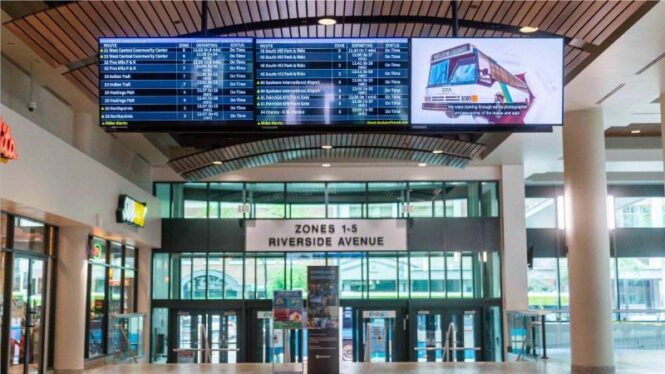
January 25, 2022 –Fifteen new 55-inch real-time display monitors were recently installed at the STA Plaza. The monitors are designed for long-term commercial use and offer bright and vibrant imagery with enhanced visibility.
Spokane Transit partnered with Spokane-based Zipline Interactive to custom build displays that show departure times and the status of each bus. Another vendor, Nanonation, provided the software and media players needed to display and manage content on the new screens.
“Combining these advanced software technologies with the new monitors has allowed us to create an enhanced user experience for our customers here at the Plaza and throughout the bus system,” said Chris Tohm, STA’s Web Services Manager.
In addition to the Plaza, the new digital information displays have been installed at West Plains Transit Center, Spokane Community College Transit Center, Spokane Falls Station, Mirabeau Park & Ride, South Hill Park & Ride, Five Mile Park & Ride, and Eastern Washington University in Cheney.
“The new monitors make it very easy to find departure information for your buses,” Tohm said. “We’re looking forward to the next phase of installations, which will be at stations within the high-performance transit network, including City Line.”
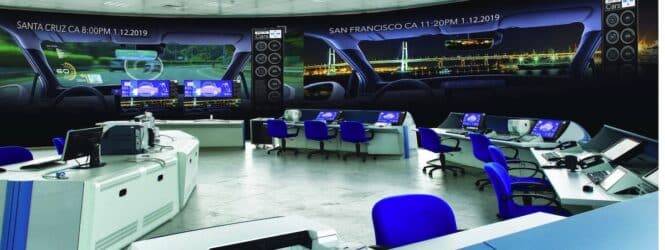
First noted on Sixteen:Nine — The solution is as much or more about things like big displays for control rooms and ops centers, but more conventional workplace digital signage would be another type of endpoint.
Editors Note: Generally, AV-over-IP is the long version of PoE. Big deal in thinclient world. Advantages are: Cat5 already in place, much greater distance than traditional baseband, really no limit on devices that can be connected. Only requirements are Cat5/6 and a modern router.
Announcement from Userful
LINCOLNSHIRE, Ill., Jan. 31, 2022 – LG Business Solutions USA and Canadian software company Userful are introducing an end-to-end, software-defined AV-over-IP solution that combines Userful’s Visual Networking Platform and LG’s webOS Signage™ platform to optimize display networks for control rooms, digital signage networks, corporate signage and video walls. This announcement is the latest in LG’s continued efforts to build strong relationships within its partner ecosystem to deliver next generation solutions for the customer.
As a result of the Userful-LG collaboration, digitally-integrated enterprises in key markets around the world can now deploy IT-managed services from virtually any source to webOS displays with advanced streaming capabilities, flexibility in deployment and NIST-caliber security. Whether it’s providing immediate video and data through real-time streaming protocols (RTSP) for control rooms or managing 8K content across hundreds of displays, integrators and end-users can expect to enjoy a powerful, streamlined display network management experience with the Userful platform and LG displays.
According to Gianni Restaino, LG Business Solutions USA’s vice president of engineering, the alliance will deliver the future of display network management just in time to help integrators and enterprise businesses capitalize on the exponential growth forecasted for AV-over-IP in the next five years. “Together, LG and Userful have created a digital display network management platform that can both simplify and empower LG installations to enable security, content delivery speed, and flexibility in content delivery and display deployment,” he said.
“With the acceleration of new services and digital transformation, there is a clear need for a centralized platform to manage visual services in combination with data, IoT and AI,” Restaino added. “Userful’s software-defined platform uniquely integrates all of these, and delivers them through private/public cloud servers to webOS signage displays optimized for the network, enabling AV services across an entire organization.”
The companies jointly recognized the growth potential of AV-over-IP in 2019 and began developing a custom, lightweight software solution that runs on top of LG’s webOS Signage platform for flat-panel and direct-view LED displays, focusing on simplicity, reliability, flexibility and security. According to Userful, the resulting platform is expected to deliver significant hardware and energy cost savings while helping to reduce carbon footprints.
The potential market growth is enormous, with applications ranging from mission critical displays and enterprise-wide digital signage networks to corporate lobby video walls and large conference room displays. In fact, according to Maia Research, the AV-over-IP market is poised to grow from $3 billion today to $51 billion in 2027, with 85 percent of growth expected in the corporate, government and education sectors, positioning the LG-Userful solution to meet the demand for display network improvements and enhanced capabilities.
Userful CEO John Marshall praised the hard work of both companies and noted that other display manufacturers have been unable to match LG’s level of software integration, making this alliance even more valuable and unique.
“The industry underestimates the difficulty of optimizing traditional AV products for an IT environment, especially with network distribution challenges and demanding enterprise applications,” Marshall said. “The AV industry has historically worked with NAB codecs and AV standards, focusing on the highest-quality AV over cabled HDMI technology – the addition of multi-protocol-driven networks is an entirely new challenge. That LG was able to integrate such IT protocols into its core firmware, at the very heart of its media pipeline, is beyond impressive. Simply put, this solution simplifies the job of IT and can reduce installation and maintenance complexity.”
In addition to LG, Userful worked with other display manufacturers “who proceeded to fail at such sophisticated integration of IT standards in their firmware,” Marshall said. “Such developments highlighted the difference between low-cost display manufacturers and modernized IT-ready displays that suit the needs of the modern enterprise. We’re proud to work together to lead the way forward for the industry and deliver new solutions to improve enterprise business operations.”
About Userful
Userful is a leading platform-as-a-service provider in the Enterprise AV-over-IP market—the fastest-growing segment of the IT industry. Userful’s Visual Networking Platform is disrupting the market with a Platform-as-a-Service (PaaS) model that allows customers to choose from a suite of highly-integrated AV applications (SaaS offerings, secure, SSO, integrated UI) to support modern service needs across the enterprise. From corporate signage to control room solutions to streaming platforms and data metrics, Userful’s solutions enable modernized business operations for IT leaders and the functional departments they support. Userful helps organizations advance the way they work, learn and govern with secure, scalable and centrally managed solutions for employee and customer engagement worldwide.
About LG Business Solutions USA
The LG Electronics USA Business Solutions division serves commercial display customers in the U.S. digital signage, lodging and hospitality, systems integration, healthcare, education, government and industrial markets. Based in Lincolnshire, Ill., with its dedicated engineering and customer support team, LG Business Solutions USA delivers business-to-business technology solutions tailored to the particular needs of business environments. LG Electronics USA is the North American subsidiary of LG Electronics Inc., a $56 billion global force in consumer electronics, home appliances and air solutions. www.LGSolutions.com.
For further press information, media assets or to schedule interviews, please contact:
Danielle Alfaro, PR & Communications Manager
Userful Corporation
E: communications@userful.com
Nice article on AV-over-IP Benefits
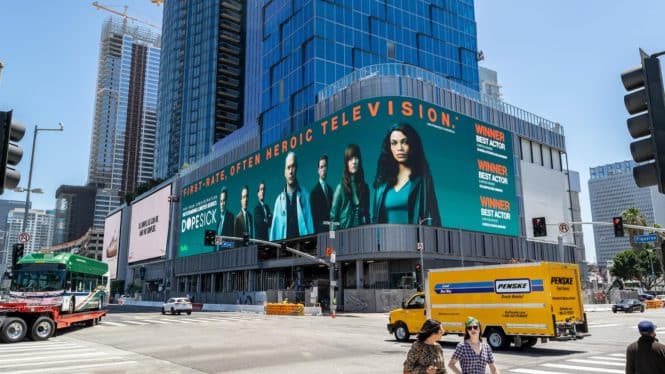
LOS ANGELES—Installation of a massive exterior video display in the heart of downtown Los Angeles (DTLA) was recently completed at the intersection of S Figueroa St. and W Pico Blvd. The continuous LED video façade at Moxy and AC Hotel Downtown Los Angeles is located across from the LA Convention Center, L.A. LIVE, and Crypto.com Arena and extends about the length of a football field.
Premier out-of-home media company Branded Cities owns exclusive rights to market and sell premium advertising on the curved video screen, which will be marketed as “The Moxy” and is now the largest continuous digital canvas in the highly coveted DTLA neighborhood.
“Branded Cities is known for its iconic signage in the most highly demanded areas throughout North America, and the signage being deployed at the Moxy and AC Hotel Downtown Los Angeles will be the most sought-after digital experience in the downtown Los Angeles central core,” said Steven Ellman, chairman and chief executive officer of Branded Cities. Unlike other digital out-of-home (DOOH) units in direct proximity that have category exclusions due to existing Crypto.com (formerly the STAPLES Center) partnerships, The Moxy is free of any advertising restrictions.
The new LED mega-spectacular is a 15,000-square-foot video wall built from SNA Displays’ EMPIRE™ Exterior line of LED display technology and boasts a resolution of 1,890 x 11,480 pixels. The mammoth screen, about 50 feet tall, extends along S Figueroa and wraps the corner of a six-level parking structure at W Pico, providing extended viewing and long read times for pedestrian and auto traffic.





Consumer Experience Group (CEG), a Los Angeles-based consultancy for experiential display projects, managed the large development’s digital and static signage elements on behalf of property owner Lightstone, a New York-based real estate investment firm.
“Finally going live with the one of the largest signage developments the LA area has ever seen has been extremely rewarding,” said Jeremy Kolieb, principal at CEG, which managed the project from design and placement to vendor selection to entitlements with the City of LA. “We’ve worked with wonderful partners for the better part of six years on this development, and I couldn’t be prouder of what we’ve accomplished. Give the size and placement, the signage is instantly iconic and impacts all of downtown LA.”
SNA Displays engineered custom LED cabinets to accommodate a seamless turn of 82.5 degrees. The digital display employs 8.0 mm pixel pitch technology, tighter than other large-format exterior LED installations in Los Angeles, giving the video screen almost 22 million pixels.
The Moxy adds to a growing footprint for SNA Displays, which had previously installed more than 100,000 square feet of digital canvas in the LA area.
“With the sheer size and complexity, this has been an incredible project,” said Rasool Sayed, a Los Angeles-based senior project manager for SNA Displays. “These massive, new-development projects have become a specialty for us—coordinating multiple partners and trades, engineering and fabricating custom technology to meet strict guidelines, and performing extremely intricate planning. The Moxy and AC mega-spectacular is another great installation for SNA Displays and our partners.”
With two unique experiences under one roof, Moxy Downtown Los Angeles and AC Hotel Downtown Los Angeles is the city’s new destination for visitors and locals alike. The dual-branded hotel offers 727 guestrooms; 12 restaurants, bars, and lounges; four large outdoor terraces including a Miami-meets-Copacabana pool deck; and 10,000 square feet of flexible meeting and social events space.
YESCO fabricated and installed more than 225,000 pounds of structural steel for the LED mega-spectacular and provided over 7,200 square feet of static signage for the project.
About SNA Displays
SNA Displays brings creative visions to life by building high-end digital displays as vivid and dynamic as the imagination. SNA Displays employs a team of SNAPros™—engineers, skilled project managers, systems experts, installation managers, and support staff—whose mission is total project satisfaction.
SNA Displays is headquartered in Times Square and has worked with clients to design and build some of the largest and most recognizable digital spectaculars in the world. Discover how Dreams Live Digitally® at snadisplays.com.
About Branded Cities
Branded Cities is the premier global out-of-home advertising company specializing in iconic media in iconic destinations that connects brands with people through Out-of-Home advertising media and services. To learn more, visit brandedcities.com.
About YESCO
Since 1920, YESCO has produced custom signs, lighting, and other display systems for businesses of all types and sizes. For more information, visit yesco.com.
About Lightstone
Lightstone, founded by David Lichtenstein, is one of the most diversified privately held real estate companies in the United States. Headquartered in New York City, Lightstone is active in 25 states across the country, developing, managing and investing in all sectors of the real estate market, including residential, hospitality, commercial, and retail. With 168 existing properties, Lightstone’s over $7.5 billion portfolio currently includes over 7.5 million square feet of industrial, logistics, life sciences, and commercial properties, over 23,000 residential units, and over 4,100 hotel keys. Lightstone’s development portfolio includes over $3.5 billion currently under development in the residential and hospitality sectors spread across New York City, Los Angeles, and Miami. Learn more at lightstonegroup.com.
About Moxy Downtown Los Angeles
Reflecting the bold, adventurous spirit of California, Moxy Downtown Los Angeles is a haven for modern nomads in LA’s creative epicenter. Brought to life by an all-star team of top architecture and interior design firms, including Gensler, Yabu Pushelberg, and Basile Studio, the 380-room hotel channels the neighborhood’s forward-thinking energy and multicultural heritage, providing fun-hunting travelers with experiences around every corner: 13 restaurants, bars, and clubs; four outdoor terraces and a pool deck overlooking the LA skyline; and flexible, tech-centric spaces for coworking, meeting, and large social events. Floor-to-ceiling windows light up the smartly designed and affordable guestrooms, and a playful, cheeky attitude fuels the imagination. www.moxydtla.com.
About AC Hotel Downtown Los Angeles
AC Hotel Downtown Los Angeles is a sanctuary providing discerning travelers with the freedom and versatility they crave amid the dynamic streets of Downtown LA. Blending the AC brand’s timeless Spanish heritage with DTLA’s artistic soul, designers Yabu Pushelberg have created an elegant atelier for thinkers and doers. With ample space and floor-to-ceiling windows, the 347 ethereal guest rooms provide a streamlined, serene place to live, work, create, and recharge. A warm, light-filled bar and lounge is joined by the intimate library and the 34th-floor rooftop garden with sweeping views of LA. Guests can easily dial up the fun factor, thanks to 11 additional restaurants, bars, and clubs, three additional outdoor terraces, and a pool at Moxy Downtown Los Angeles— all just an elevator ride away. www.achoteldtla.com.
About Consumer Experience Group
Consumer Experience Group is focused on enhancing the consumer experience by providing clients with the know-how to determine how and what technology to integrate into their projects, including shopping centers, retailers, commercial properties, hotels, theme parks and much more. Learn more at consumerexperiencegroup.com.
More Posts
Follow Up Posts