Multiple quotes, components, China, RFP Templates and more.
Free self-service quotes. Thanks for visiting and we are happy to help, for free. Typically we distribute your request to all of the members and they will respond to you.
We are happy to connect you with members for getting a quote
We can arrange quotes for components and related
We arrange quotes from China
We can provide sample RFPs as models for you to consider. Legalese gets complicated sometimes.
If you are looking to sell or promote services or products then see Become a Member. You can also add yourself for free to online database.
Much easier to support those who support us — Craig
STRATACACHE is the technology partner powering Albertsons’ new in-store digital display network, which will feature a large fleet of LCD screens across its stores123. While Albertsons and STRATACACHE have not publicly disclosed the specific manufacturer of the LCD panels for this rollout, multiple sources confirm that STRATACACHE has a well-established partnership with BOE Technology Group, one of the world’s leading semiconductor display manufacturers4567.
Through an original equipment manufacturer (OEM) agreement, STRATACACHE sources a full line of branded LCD display technology from BOE, distributing these displays globally via its Scala and Optika Display brands. This partnership enables STRATACACHE to offer advanced, commercial-grade LCD screens designed for 24/7 retail use, featuring capabilities like advanced power management and intelligent sensor support4567.
Given this ongoing and strategic relationship, it is highly likely that the LCD screens STRATACACHE deploys for Albertsons will be sourced from BOE Technology Group4567. However, unless Albertsons or STRATACACHE makes a direct statement specifying the panel supplier for this particular project, this conclusion is based on STRATACACHE’s publicly documented supply chain and technology partnerships.
Albertsons is piloting digital ad displays in stores this summer, the grocer announced today during the Cannes Lions in France.
Its retail media arm, Albertsons Media Collective, is partnering with digital solution company Stratacache for the pilot, which will see digital screens deployed at stores in two regions, its Northern California and Jewel-Osco divisions, this summer. The screens will be placed in “high-traffic areas with impactful touchpoints in the customer journey” throughout the store, the company said, including the store entry and produce department. The company is showcasing the new advertising features at a mock grocery store set up at Cannes this week.
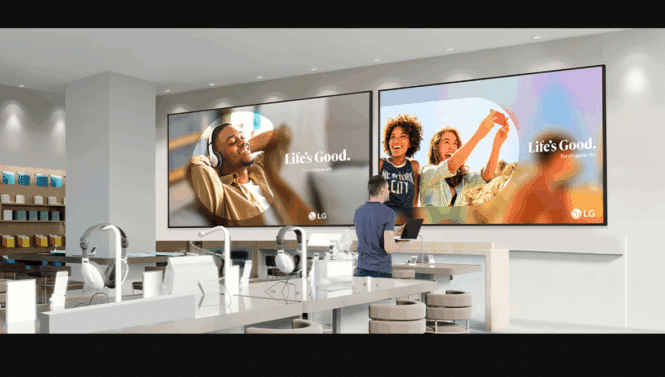
LG Electronics has rolled out LG ProActive360, a new digital signage management solution designed to keep your screens running and your business focused on customers, not troubleshooting. Here’s the rundown:
Perspective
LG has had SuperSign for years. Typically the LG reps haven’t been super aggressive selling it against software partners (unlike Samsung and VXT). This should make it easier for C-Stores to monetize their displays with ads.
What’s New?
LG ProActive360 is a managed service platform with three tiers: Silver, Gold, and Platinum.
The core promise: maximize signage uptime, minimize headaches, and turn every screen into a business asset—not an IT burden1.
How It Works
Silver Tier:
Active device management and monitoring keep your signage network connected and performing at near 100% uptime.
Remote firmware updates, Chromium Long-term Support, and flexible power scheduling are built in.
LG’s monitoring tools instantly detect issues—black screens, frozen content, playback errors—so you don’t have to.
LG’s expert team diagnoses problems, provides root cause analysis, and manages warranty claims directly with your onsite staff1.
Gold Tier (Coming Soon):
Adds collaborative content management: LG’s “Virtual White Glove” service works with your creative team to upload, schedule, and preview campaigns.
Content is published across all devices, with full reporting and ongoing updates to keep messaging fresh and on target1.
Platinum Tier (Coming Soon):
Unlocks Digital-Out-of-Home (DOOH) advertising, including programmatic ad approval and brand safety.
Turns your signage network into a revenue generator by connecting your screens with advertisers targeting your audience1.
Bottom Line:
LG ProActive360 is about proactive management—not waiting for things to break. It’s a turnkey solution for retailers and system integrators who want their digital signage to be reliable, relevant, and profitable, all with minimal IT hassle. The future of signage is managed, monitored, and monetized—just the way we like it1.
LG Debuts ‘Pro Centric+’ for Hotels
LG Electronics has launched Pro:Centric+, its next-gen hotel TV platform, aiming to make in-room displays true business assets for hoteliers. Debuting at HITEC 2025, Pro:Centric+ is all about turning the hotel TV from a simple guest amenity into a central hub for operations, revenue, and guest engagement1. —Hospitality Technology article
Key Takeaways:
Beyond TV: Business Infrastructure
LG’s Pro:Centric+ isn’t just about streaming content. The platform allows seamless integration of third-party services—think operational tools, IoT, and monetization apps—directly into the TV’s core system, not just as add-ons. This means hotels can reduce costs, boost safety, and unlock new revenue streams, all from the guestroom TV12.
Easy Setup, Smarter Management
Forget clunky remotes and room-by-room installs. The new web-based management interface lets hotel staff set up and maintain TVs wirelessly, even from the hallway, using smartphones or tablets. This is a big leap in labor efficiency and ease of use1.
Backward Compatibility
Pro:Centric+ works with LG commercial TVs running webOS 5.0 and newer, protecting hotels’ previous investments and making upgrades less painful1.
Monetization and Advertising
LG is rolling out new ad and revenue programs—client-side ad insertion, banner ads, and LG Channels—so owners and brands can directly monetize in-room screens1.
Operational Intelligence with IoT
Partnerships like the one with Anacove bring IoT devices (smart thermostats, leak detectors, staff safety devices) natively onto the Pro:Centric platform. The result: the TV becomes an operational intelligence node, managing energy, detecting issues, and tracking assets—no extra hardware needed2.
“With Pro:Centric+ the TV becomes more than a piece of glass. It shifts the conversation from in-room TVs as guest amenities to essential business infrastructure.” — Jake Benner, LG Electronics1
Bottom Line:
LG’s Pro:Centric+ is designed to make hotel TVs smarter, more connected, and directly profitable—streamlining everything from setup to operations to advertising. In-room displays are no longer just for Netflix; they’re now a backbone for hotel business, guest engagement, and operational efficiency12.
Visit us at the InfoComm digital signage tradeshow. This year Kiosk Industry has a booth at InfoComm and #3489. June 11-13 Orlando. We will offer free passes and invites as part of our booth. And it is official that we are not only a Provider but now a Member (Bronze).
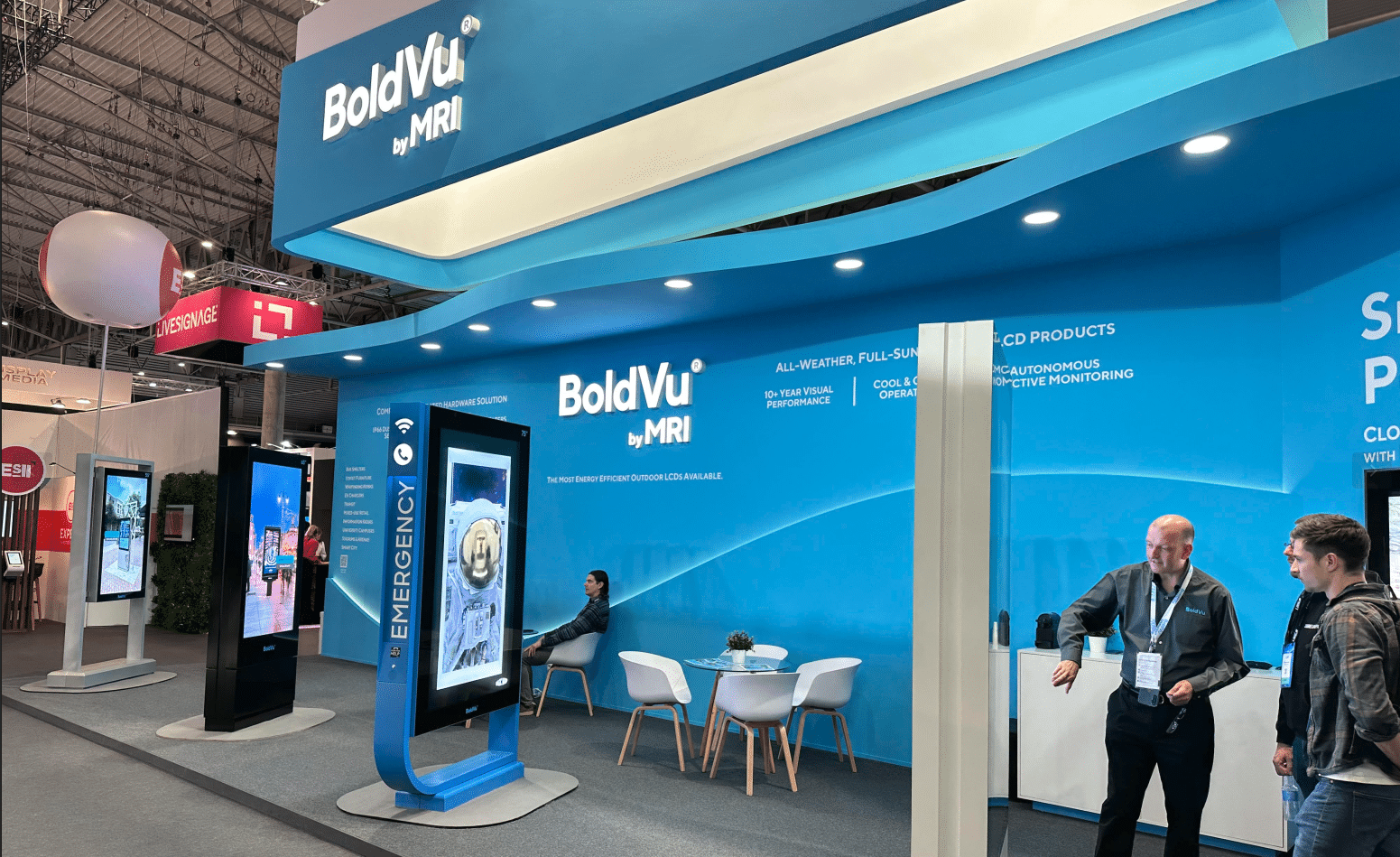
BoldVu Large Format Outdoor Digital Signage and Smart City terminals. LG outdoor displays used.
VP – Business Development at BoldVu by MRI Alpharetta, Georgia, United States Rochester Institute of Technology Manufacturing Resources International (MRI) https://www.linkedin.com/in/peter-kaszycki-14b2264/
InfoComm is the largest and most comprehensive professional audiovisual trade show in North America, produced by the Audiovisual and Integrated Experience Association (AVIXA). The event brings together manufacturers, integrators, dealers, and end-users worldwide to showcase the latest technologies, products, and services in the professional audiovisual (pro AV) industry. InfoComm’s origins date back to 1946 when the National Association of Visual Education Dealers (NAVED) held its first conference, and since then, it has grown significantly to support the pro AV industry2.
AVIXA, established in 1939, is the international trade association representing the audiovisual industry. It has more than 3,000 enterprise members representing over 20,000 AV professionals from more than 80 countries. AVIXA is a hub for professional collaboration, information, and community, offering resources such as AV standards, certification, training, market intelligence, and thought leadership14.
InfoComm 2025, scheduled for June 7-13 at the Orange County Convention Center in Orlando, Florida, will explore key trends in the pro AV industry, including the intersection of AV, IT, and broadcast, and the impact of AI on AV solutions1. The event will feature over 150 new exhibitors, showcasing advancements in LED displays, AV-over-IP solutions, and interactive technologies. The education program will include sessions across 10 tracks, with a focus on AI applications in various areas of the industry1.
InfoComm provides a dynamic environment for AV solution providers and buyers to conduct business, facilitating growth in the $325 billion pro AV industry, which is expected to add nearly $100 billion in revenues over the next five years1. The event allows attendees to network, learn about industry trends, and explore new technologies and business partnerships.
Featured Exhibitors
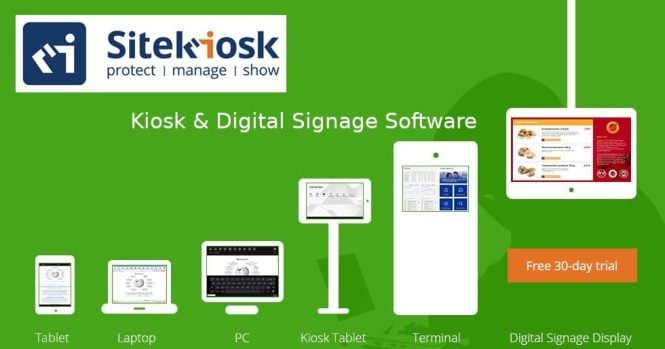
SiteKiosk Onlineis a cloud-based software solution designed to manage and secure public-access devices such as kiosks, digital displays, public computers, tablets, and laptops. It is compatible with both Windows and Android systems, offering a comprehensive platform for creating and managing interactive kiosks and digital signage displays.
Key Features of SiteKiosk Online
Protection:
Customizable and Hardened Browser: Ensures secure browsing by restricting access to unauthorized websites and protecting against malware.
Device Lockdown: Secures devices from tampering and unauthorized access from startup.
Data Security: Automatically clears session data after each use to maintain privacy.
Management:
Remote Access and Monitoring: Allows administrators to manage and monitor devices from a centralized dashboard, receiving real-time alerts for any issues.
Two-Factor Authentication: Supports secure login options, including LDAP and Active Directory integration.
Configuration Management: Enables remote updates and configuration changes across all devices.
Time and Event-Controlled Displays: Enables scheduling of content based on time, day, or external triggers.
API for Custom Scripts: Allows integration with external sensors and devices using common scripting languages like JavaScript and HTML.
Benefits
Customization: Offers flexibility in creating interactive user interfaces tailored to specific business needs.
Scalability: Supports expansion as businesses grow, allowing easy addition of new devices.
Security and Compliance: Ensures comprehensive privacy and compliance management, protecting customer data and maintaining regulatory standards.
Overall, SiteKiosk Online is designed to enhance customer experience through interactive digital solutions while ensuring operational efficiency and security across various industries.
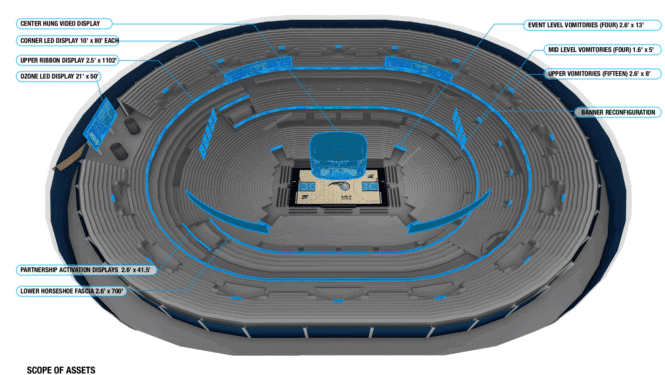
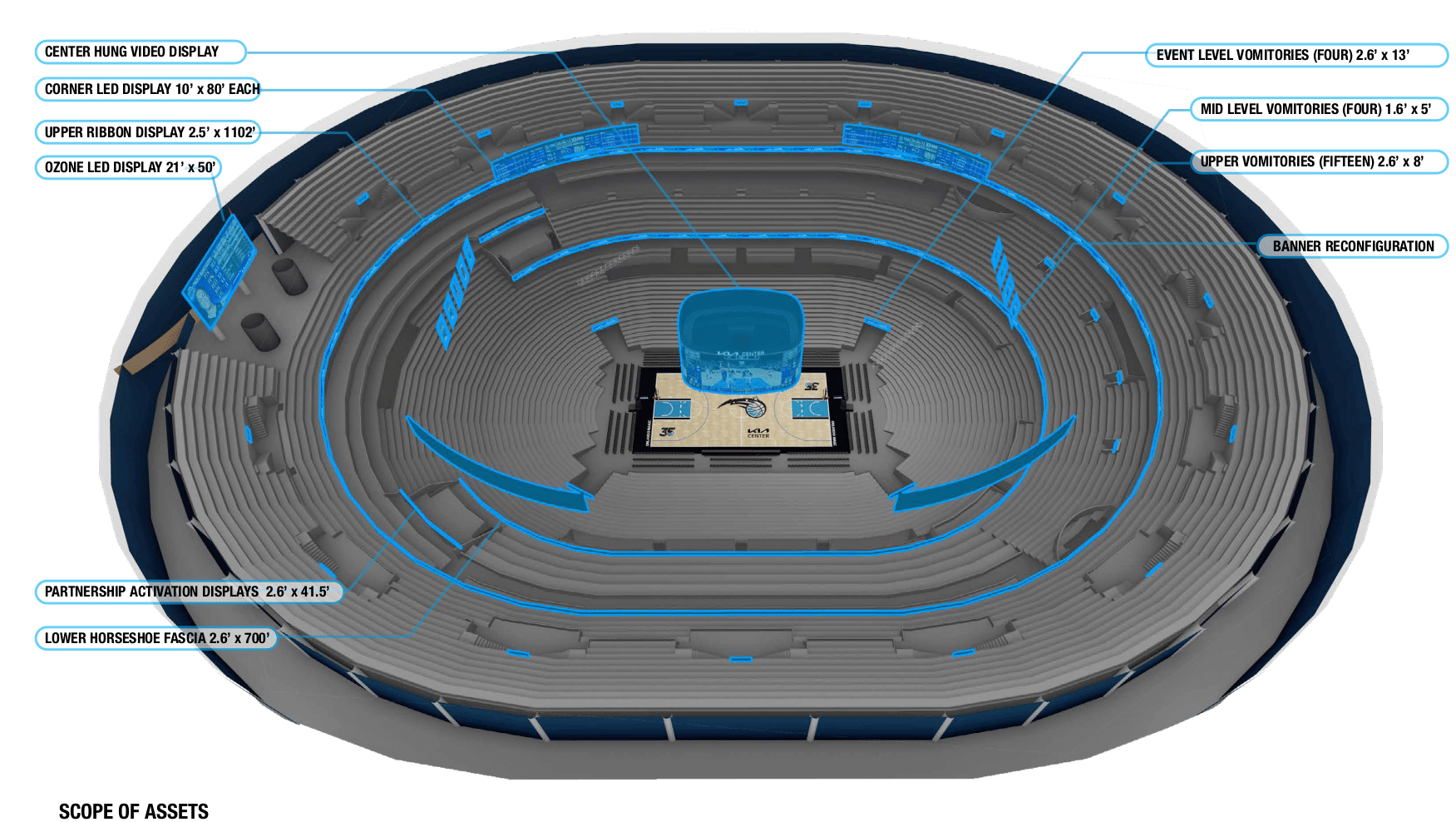
Big AV projects are massive undertakings. Recently the KIA Center issued large RFP. Last night we got a walkthru of the Intuit Dome for the Clippers. Lighted seats! We were installing Gloshine into our digital signage LED list (we work with Sophia Wu) and noticed some of their clients. Seems like a good idea to take a look at these big LED installations.
We want to thank Sophia for bringing this up so we’ll start with Gloshine and outline what a major provider credentials look like.
Gloshine
Major Clients and High-Profile Projects of Gloshine
Gloshine Technology is a leading LED display manufacturer based in Shenzhen, China, with a significant presence in both domestic and international markets. The company has established itself as a preferred supplier for a variety of large-scale, high-profile events and organizations. Here are some of Gloshine’s most notable clients and project involvements:
Major Clients and Events
CCTV (China Central Television): Gloshine has provided LED displays for numerous CCTV productions, including the highly watched CCTV Spring Festival Gala, CCTV Mid-Autumn Festival Gala, CCTV New Year’s Eve Gala, and other major televised events.
Major Chinese Satellite TV Networks: Their products have been used by Hunan Satellite TV, Jiangsu Satellite TV, Zhejiang TV, Southeast Satellite TV, Henan Satellite TV, Xizang Satellite TV, and Dragon TV for various galas, concerts, and special broadcasts.
International Sports Events: Gloshine supplied display solutions for the FIFA World Cup, the Pyeongchang Winter Olympic Games, and the Brazil Olympic Games.
Large-Scale Concerts and Tours: Gloshine holds an 85% market share in concert displays for Hong Kong and Taiwanese stars performing in mainland China. Notable projects include Andy Lau’s 2024 tour and the Greater Bay Area Music Festival.
Global Summits and Forums: Their displays have featured at the Asian Civilization Conference, Bo’ao Forum for Asia, APEC Summit, China International Import Expo, Russia National Victory Anniversary, and the “Belt and Road” International Forum for Cooperation.
Major Expositions and Ceremonies: The company’s products have illuminated events such as the Beijing World Horticultural Exposition, Xiamen BRICS Conference, and the opening ceremony of the 18th Shanghai International Film Festival.
Entertainment and Gaming: Gloshine provided displays for the League of Legends Finals at Beijing Bird’s Nest and the Tmall Double 11 Global Carnival.
Corporate and Technology Collaborations: Gloshine has been selected as an ODM supplier for Panasonic and has collaborated with companies like ZEISS and Idigital for virtual production setups at industry shows such as NAB.
Additional Highlights
Gloshine’s LED displays have been used in over 50,000 applications across more than 150 countries and regions, serving not only live events but also XR (extended reality) virtual filming, exhibitions, and gaming competitions.
The company’s reputation for reliability and innovation has earned it multiple international awards and certifications, further cementing its status as a trusted partner for large-scale, technically demanding projects.
Summary Table: Notable Clients and Events
Category Examples
National Broadcasters CCTV, Hunan TV, Jiangsu TV, Zhejiang TV, Dragon TV
International Sports FIFA World Cup, Olympics (Pyeongchang, Brazil)
Major Concerts Andy Lau’s 2024 tour, Greater Bay Area Music Festival
Global Summits/Forums APEC, Bo’ao Forum, Asian Civilization Conference, BRICS
Expos & Ceremonies Beijing World Horticultural Expo, Shanghai Film Festival
Gaming/Entertainment League of Legends Finals, Tmall Double 11 Carnival
Technology Partners Panasonic (ODM supplier), ZEISS, Idigital (virtual production setups)
Gloshine’s extensive client list and project portfolio reflect its leadership in the LED display industry, particularly for high-visibility, technically complex events and partnerships with major broadcasters, entertainment companies, and global corporations
Leyard
Beijing 2022 Winter Olympics: Provided display technology for the opening ceremony.
United Nations Office at Geneva, Room XIX: Supplied advanced LED screens.
H&M Flagship Store, Regent Street, London: Installed one of Europe’s largest indoor LED screens.
Porsche Museum, Germany: Created the Future Heritage Portal with immersive displays.
RTL Deutschland: Enhanced NFL broadcasts with innovative live studio LED screens.
Oxford’s Bodleian Libraries: Delivered a prominent LED wall for the public loggia.
Beaulieu International Group: Centerpiece LED screen for their experience centre.
Slovakian Broadcaster TV Markíza: Provided flexible broadcast studio solutions.
Danish Film Institute: Rooftop cinema LED installation.
Various financial institutions, broadcasters, and museums across Europe.
Unilumin
Aviva Insurance, London: Installed a 63-square-meter curved LED screen at headquarters.
Sky Television, Milan: Provided a 5.23-square-meter display for their sports broadcasting station.
Samsung Headquarters, Korea: Supplied corporate office LED display systems.
Statue of Liberty, USA: Provided LED display solutions.
Linq Casino Hotel, Las Vegas: LED installations for entertainment and branding.
Lifepoint Church: Large-scale LED wall for worship and events.
Burning Man Festival: Supplied outdoor LED displays for art installations.
Numerous Fortune 500 companies: Unilumin’s LED products are deployed in control rooms, boardrooms, broadcast studios, and retail environments worldwide.
Absen
Shanghai Hongqiao Airport (OXO City): 1,800m² of Absen LED, including a 700m² videowall at the airport’s exit.
Arlington ISD Performing Arts Center, Texas: LED installations for educational and performance spaces.
The Heights Church: Provided LED display solutions for worship environments.
Guangzhou Baiyun Kaisa City Plaza: 3D OOH display, immersive LED cave, and seamless video walls.
Retail environments globally: Absen’s LED screens are widely used in flagship stores, shopping malls, and brand experiences.
Over 60,000 projects in 140 countries: Absen serves a broad range of sectors including transportation, retail, entertainment, and corporate clients.
These companies have a global footprint and serve high-profile clients in sectors such as retail, transportation, broadcast, corporate, education, and cultural institutions. Their LED display solutions are used for everything from massive public installations and sports events to corporate boardrooms and entertainment venues.
Cool arena I saw the other day —
Click for full size kia
The AV technology for the new LA Clippers basketball arena, Intuit Dome, is led by Daktronics, which designed and built the arena’s signature “Halo Board”-the largest double-sided halo video display ever installed in an arena setting. This massive 4K-capable display covers nearly an acre, with 38,375 square feet of digital canvas, and is a central feature for delivering immersive fan experiences.
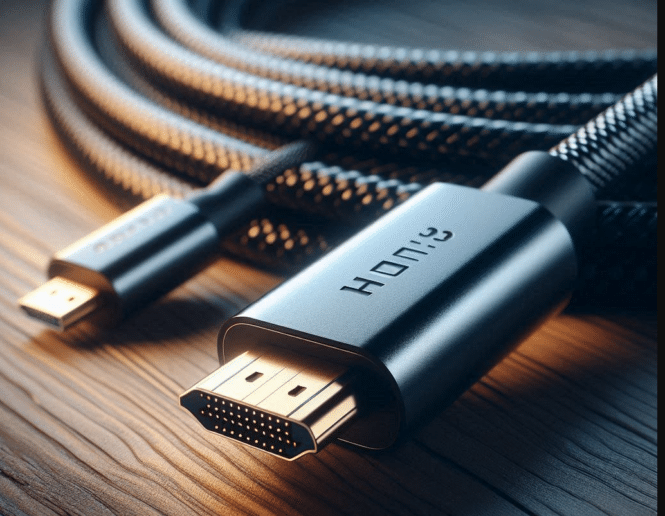
Good article from avnetwork.com explaining HDMI 2.2. HDMI 2.2 will elevate the quality and performance of digital signage, making it more effective for communication and engagement in various settings.
HDMI 2.2 supports a bandwidth of 96 Gbps, which is double that of HDMI 2.1‘s 48 Gbps. This significant increase allows for higher data transfer rates.
Support for Higher Resolutions:
The new standard supports a variety of resolutions, including 4K, 8K, 10K, 12K, and even 16K. This makes it ideal for future-proofing AV setups.
Enhanced Features:
HDMI 2.2 introduces features that improve the overall viewing experience, such as better color depth and refresh rates, which are crucial for high-end gaming and professional video production.
Compatibility:
While HDMI 2.2 is designed to be backward compatible with previous versions, users will need new cables to take full advantage of the increased bandwidth and features.
Industry Impact:
The introduction of HDMI 2.2 is expected to have a significant impact on the professional AV industry, particularly in areas like broadcasting, gaming, and high-resolution content creation.
Excerpt
Bryan Phann, ViewSonic’s senior business line manager for LFD–Commercial Digital Displays, agreed that HDMI 2.2 delivers a massive leap forward with increased bandwidth, support for up to 8K at 240Hz and 10K at 120Hz, and the Latency Indication Protocol (LIP), which improves audio and video sync. “These innovations align seamlessly with ViewSonic’s dedication to pushing technological boundaries,” he said. “As part of our forward-looking strategy, upcoming ViewSonic products will adopt HDMI 2.2, empowering users to experience superior visual clarity, smoother refresh rates, and synchronized audio-visual output. The new Certified Ultra96 cable support will further maximize these gains, ensuring you can unleash the full power of next-generation connectivity.”
Key Features of HDMI 2.2 Impacting Digital Signage
Higher Bandwidth and Resolutions:
Increased Bandwidth: HDMI 2.2 doubles the bandwidth to 96 Gbps, allowing for higher resolutions and refresh rates such as 8K@240Hz and 10K@120Hz.
Enhanced Visuals: This increased bandwidth supports sharper and more detailed visuals, which are crucial for capturing attention in retail and corporate spaces.
2. Improved Audio-Video Synchronization:
Latency Indication Protocol (LIP): This feature enhances audio-video synchronization, reducing lag and ensuring a smoother viewing experience, especially in complex setups involving multiple devices.
3. Certified Ultra96 Cables:
Reliability and Performance: The new Ultra96 HDMI cables are certified to ensure they meet performance standards, providing users with reliable and high-quality connections.
4. Commercial Applications:
Large-Scale Displays: HDMI 2.2 is beneficial for large-scale digital signage, offering clearer and more detailed visuals that are essential for effective communication in public spaces.
Benefits for Digital Signage
Sharper Visuals: Higher resolutions and refresh rates provide sharper visuals, making digital signage more effective at capturing attention.
Future-Proofing: The increased bandwidth and new features prepare digital signage for future technologies and applications, such as AR/VR and spatial reality.
Overall, HDMI 2.2 will elevate the quality and performance of digital signage, making it more effective for communication and engagement in various settings.
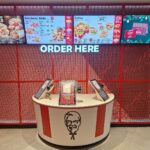
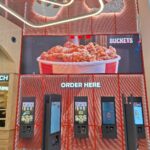
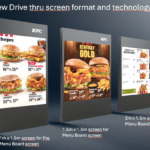
Pretty easy to watch the big companies like McDonald’s, Yum Foods, Inspire and others. And we think US companies at that point. Worth noting KFC has over 30,000 restaurants worldwide. Less than 4000 in the US. Everybody likes chicken apparently 🙂
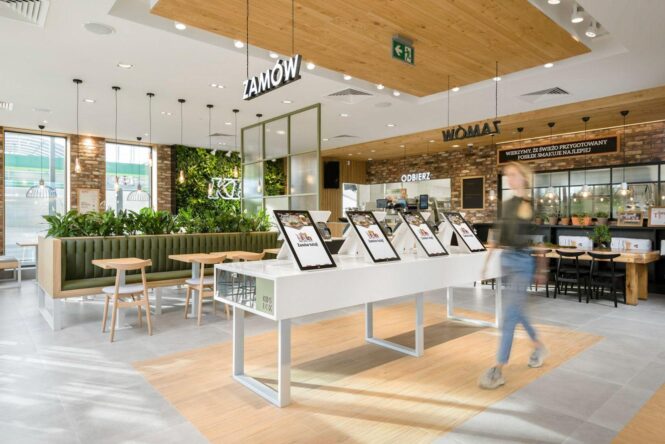
Our tagline — Europe – Are they Behind or Ahead in Self-Service? The US seems to be falling behind Europe and China for that matter. All the cool stuff is there. I know there is residual US pride at play but best to get over it and get with it. Competition is good!
Technology-wise, the fact is that Europe has always led in technology and in design over the years. We take a look at major design and technology advances in Europe.
Actual AI drive-thru technology that works and isn’t just “talked about” for stock price.
Innovative outdoor designs
Counterless – Employee Free Zones
Next generation menu boards
SCO Self Checkout
Part I – Poland
Pictures from Poland
We’ll start with pictures from Poland. We are not going to show a few things which provide distinct competitive advantage.
Click for full image — Different size for LED menu boards
COB (Chip-on-Board) displays offer several advantages over traditional LED displays, particularly SMD (Surface Mount Device) LED screens. Here are the key benefits of COB technology:
Visual Quality and Performance
Higher Resolution and Image Quality: COB displays can achieve smaller dot pitches, allowing for more pixels per unit area. This results in higher resolution, more explicit images, and more delicate picture quality. The tightly packed LED chips enable better color mixing and uniform light distribution, reducing SMD displays’ point light source effect.
Superior Contrast and Color Rendering: COB LED displays can reach contrast ratios of over 20000:1, compared to SMD LED displays which typically stay below 10000:1. Result is brighter colors, sharper details, and a viewing experience similar to LCD screens. The technology also provides brilliant and accurate color reproduction, enhancing the experience with vibrant colors and subtle gradations.
Wider Viewing Angles: COB displays offer wide viewing angles due to the closely spaced LEDs emitting light together. This reduces the chance of color and brightness distortion at different viewing angles.
Design and Construction
Compact and Slim Design: COB technology allows for a more compact and space-saving design. This results in thinner and lighter displays, reducing weight by about 1/3 compared to conventional LED displays.
Better Protection and Durability: COB LED displays use advanced coating technology, providing protection against moisture, water, dust, UV rays, and impacts. This ensures high visual performance combined with substantial safety and reliability.
Efficiency and Performance
Improved Heat Dissipation: In COB displays, the LED chips are directly bonded to the circuit board, allowing for more efficient heat transfer. This improves the overall performance and lifespan of the display. Aka service costs.
Higher Energy Efficiency: COB LED screens offer better energy-saving benefits than LED displays. They can achieve the same brightness levels with lower power consumption, making them more cost-effective in the long run.
Lower Pixel Failure Rate: COB-packaged LED displays have a much lower rate of dead or dropped lights than SMD packages, leading to better stability and reliability.
Environmental Adaptability
All-Weather Operation: Thanks to heat management and protective encapsulation, COB LED displays can support operation in extreme temperatures ranging from -30°C to +80°C.
While COB technology offers these significant advantages, it’s worth noting that it also has some limitations, such as higher initial costs and more complex maintenance procedures. However, for applications requiring high-quality visual performance, durability, and energy efficiency, COB displays present a compelling choice over traditional LED technologies.
Several insightful articles have been published recently on COB (Chip on Board) display technology, highlighting its advancements and potential impact on the LED display industry. Here are some noteworthy articles:
This article explores the current state of COB LED displays and their future prospects1. It discusses:
The evolution of COB technology since 2012
Core attributes of COB LED technology, including enhanced durability and finer pixel pitches
Comparative advantages over traditional technologies
This piece delves into how COB technology is shaping the future of direct-view LED displays4. Key points include:
Explanation of COB technology and its implementation
Benefits of COB, such as micro precision, durability, and visual comfort
Applications in various industries
This article focuses on recent advancements in COB display technology and its growing market applications6. Highlights include:
The Future of Digital Signage Displays According to Dave Haynes
One of the best reports we have seen covering digital signage displays technology. You have to wonder if leaders in LCD like BOE and AUO (based in China) are looking over their shoulder at microLED and COB. Definitely want to download the full report. Here is the link. Insightful and accurate reports seem almost impossible to find amongst the clutter of datamarts, but this report is one of the best. (Image – might be the first true implementation of COB LED Drive Thru displays)
Overview
The Future Displays 2025 report provides an extensive overview of the current and emerging display technologies, their applications, and industry trends. Below is a detailed outline of the report’s key sections and findings:
MicroLED Technology
Overview: MicroLED technology is highlighted as a promising but challenging innovation in the display industry. It offers advantages like superior brightness, contrast, and flexibility but faces high manufacturing costs and production complexities.
Applications: MicroLED is positioned for niche markets such as automotive displays, medical imaging, military use, and transparent or flexible displays.
Challenges: The industry struggles with scaling production, reducing costs, and achieving high manufacturing yields. Many products marketed as MicroLED are actually MiniLED.
Key Players: Companies like AUO, STRATACACHE, and VueReal are leading efforts in MicroLED development. AUO is noted for its transparent displays and sustainability initiatives.
Market Trends: The technology is expected to grow significantly but remains a premium product due to high costs.
LED Displays
Market Growth: LED displays are gaining traction across corporate and outdoor markets despite price challenges.
Innovations: Technologies like transparent LED films, mesh LED displays, and ultra-thin panels are transforming applications in signage and architecture.
Safety: Advancements in fire safety for LED displays are emphasized.
OLED Technology
Advancements: OLED continues to evolve with innovations like LG’s micro-lens arrays for enhanced brightness and inkjet printing for cost-effective manufacturing.
Challenges: OLED faces competition from MicroLED and struggles with profitability despite its high-quality visuals.
LCD Displays
Resilience: LCD remains dominant due to its cost-effectiveness, versatility, and mature manufacturing processes.
Innovations: Developments include ultra-thin panels, high-brightness models, and specialized shapes for retail and transportation.
Emerging Technologies
E-Paper: Color e-paper is maturing as a low-power alternative for static displays in retail and advertising. Collaboration between AUO and E Ink aims to expand its applications.
Quantum Dots: Printable quantum dot technology is explored for simplifying next-gen display production.
Projection: Projection technology maintains relevance in specific large-format applications.
Sustainability
AUO leads sustainability efforts by developing energy-efficient technologies like cholesteric LCDs (ChLCDs) and collaborating on large-format color e-paper displays.
Media Architecture
Innovative uses of LED technology in architectural designs include kinetic video walls, lightweight tarps turned into displays, and integration into building glass.
Visual Illusions
Emerging 3D display technologies include volumetric displays, spinning LED rotors, and glasses-free 3D solutions like Sony’s Spatial Reality Display.
Artificial Intelligence
AI’s role in reshaping industries through intelligent display systems is briefly discussed.
Industry Insights digital signage displays
Analysts highlight a transition period where established technologies like LCD maintain dominance while newer options like MicroLED struggle with adoption due to costs.
The report emphasizes that innovation must align with market needs rather than focusing solely on technical specifications.
Appendices digital signage displays
Predictions for 2025 include advancements in true MicroLEDs, new TV technologies showcased at CES 2025, and explanations of key display terms like Chip-on-Board (COB).
This comprehensive report covers over 70 stories on display technologies across various industries, offering insights into their evolution, challenges, and future potential.
Supplemental Analysis – LED versus COB
Comparison: MicroLED vs COB LED (Chatgpt3)
Both MicroLED and COB (Chip on Board) are advanced LED technologies with unique strengths and use cases. Here’s a comparison of the two:
1. Technology Overview MicroLED:
Uses millions of tiny, self-emissive LED pixels, each acting as a light source.
Allows for extremely high resolution, brightness, and color accuracy.
Ideal for ultra-thin, seamless displays.
COB (Chip on Board):
Involves mounting multiple LED chips directly onto a substrate to form a single module.
Known for uniform light output and high durability.
Commonly used in industrial, outdoor, and high-durability environments.
2. Key Features
Feature MicroLED COB LED
Brightness Very high, suitable for outdoor and bright environments. High, but slightly less intense than MicroLED.
Pixel Pitch Extremely small (<1mm), enabling 4K/8K resolutions. Larger, typically used for medium to large pitches.
Color Accuracy Exceptional, with deep blacks and wide color gamut. Good, but less advanced compared to MicroLED.
Durability Sensitive to damage; not ideal for extreme conditions. Highly durable, resistant to heat and weather.
Seamlessness Allows for bezel-less, thin designs for a premium look. Can have seams but is still compact and versatile.
Energy Efficiency Highly efficient, with better heat dissipation. Efficient but slightly less than MicroLED.
3. Advantages MicroLED:
Ultra-high resolution and pixel density.
Exceptional visual quality for close viewing.
Future-proof for premium indoor displays (e.g., high-end TVs, digital walls).
COB LED:
Rugged, suitable for outdoor and heavy-use applications.
Excellent for large-format displays in harsh environments.
Cost-effective for durability-focused installations.
4. Use Cases
Use Case MicroLED COB LED
Retail Displays High-end indoor displays. Large indoor and outdoor screens.
Outdoor Advertising Limited use due to environmental sensitivity. Ideal for billboards and rugged conditions.
Drive-Thru Systems Can offer premium quality but expensive. Durable and cost-effective; widely used.
Home Entertainment Luxury home theaters and TVs. Not typically used in consumer products.
5. Cost
MicroLED: Higher production cost due to advanced technology and precision assembly.
COB LED: More affordable, especially for large-scale deployments.
6. Pros and Cons Summary Technology Pros Cons
MicroLED Superior image quality, energy-efficient, future-proof. Expensive, less durable for outdoor use.
COB LED Rugged, cost-effective, good brightness. Lower resolution and color precision than MicroLED.
Conclusion
MicroLED: Best for premium indoor applications requiring cutting-edge display quality.
COB LED: Ideal for high-durability, cost-sensitive applications like Drive-Thru, outdoor advertising, and industrial environments.
Your choice depends on the specific requirements of resolution, durability, budget, and environmental conditions. For Drive-Thru systems, COB LED is often a better choice due to its durability, weather resistance, and cost-effectiveness.
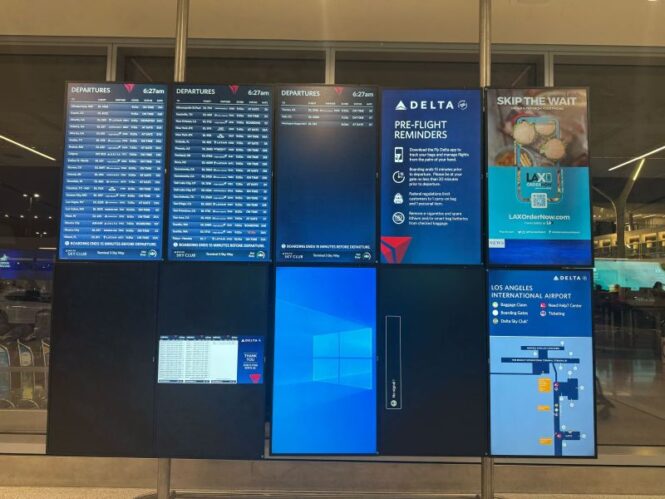
The only problem with using “low cost” digital displays (aka going cheap) is that the attitude tends to carry over into the most expensive part of the equation. Software and monitoring.
From Linkedin 2.14.2024
This one has it all: black screen, blue screen, poor formatting, “no signal” warnings, & a design disaster to top it off. A true greatest hits of screen failures 👏
How does one bank of screens manage to get this much wrong?
Even if they were working, I’d struggle to make sense of eight chaotic terminals flashing at me – especially at 6:27am.
Here are the key points from discussing the digital signage upgrades at Delta Airlines’ newly opened terminal at LAX with Delta:
Digital Transformation: The terminal features state-of-the-art digital signage to enhance passenger experience.
LED Ribbon: A 250-foot-long LED ribbon provides passenger information and employee communications.
Data-Driven Messaging: The importance of using data-driven messaging to convey real-time information to passengers is emphasized.
Expanded Use of Digital Signage: The broader use of digital signage in airports and its impact on passenger flow and experience are discussed.
Insights from Ryan Taylor: Ryan Taylor, who manages digital signage for Delta, shares his insights on the implementation and benefits of the new digital systems.