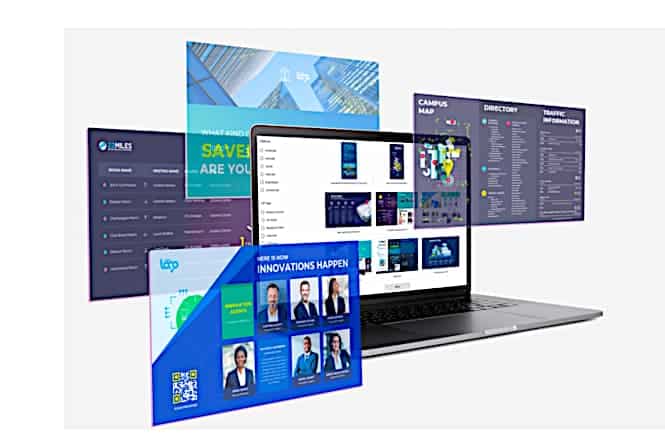
Digital Signage Tradeshow – DSE in Vegas November 2022
Digital Signage Tradeshow – DSE Update

DSE Brad Gleeson Contact – 360-620-0232
DSE Tradeshow aka Digital Signage Experience explores every aspect of digital and interactive display technology, from concept and design to content and analytics.
No matter what business you’re in or where you are on the adoption curve, the DSE tradeshow caters to your needs right now, providing access to hundreds of leading vendors of digital display, interactive technology and content solutions.
See you at DSE in Vegas November 17-19 for Digital Signage Expo. We are in booth 617 and looking forward to the show. Craig is facilitating one of the Lunch sessions.
In our booth
- Clover Kiosk by Nanonation – Nano will be highlighting their cloud platform and wide-ranging support. Also at the show Nano will show 3x screens (a Samsung, a LG and a Sony) stacked on a single dual post mount showing our three SoC platforms for signage. For Nanonation show handout DSE_Nanonation Overview-compressed.
- Keyser Digital Menu Boards – Everything You Wanted to Know – the Keyser FLEX Outdoor Digital Display System, now showcases a new full turnkey 55” LCD outdoor display with the most cost-effective design that allows all customers growing into digital, to never grow out of. Keyser 55 Dual Flex IP67 Specs
- Pyramid Polytouch Flex and also Pyramid Datasheet Booklet-compressed
- Here is our booth portal on DSE
- General Floorplan
DSE Tradeshow Agenda
- Wednesday Nov 16th
- 1PM – 5PM: Digital Signage Experience Field Tours
- 4:30PM Pre-Event Mixer – Merger Activities
- 5:30PM – 7:30PM DSE Mixer by 16:9 — It will run Nov. 16th at its longtime home, the Hard Rock Cafe on the Las Vegas Strip. As in the past, the event is on the third floor, with a big interior space and a large outside patio overlooking the mayhem on the sidewalk below. The event is free to attend
- Thursday Nov 17th
- 9AM – 9:45AM: Conference Breakouts
- 10AM – 5PM: EXHIBIT HALL OPEN
- 10:30AM – 11:30AM: Opening Keynote: Refik Anadol, new media artist
- 12PM – 1:30PM: Lunch Roundtable Discussions
- Brand Activations
- Digital Out-of-Home (DOOH)
- Education (schools/universities)
- Entertainment Venues
- Experiential Design
- Hospitality
- Interactive Tech — Facilitator is Craig Allen Keefner of KMA
- Retail
- Systems Integration
- Tech Trends — Tim Albright of AV Nation
- 1:30PM – 3:30PM: Free On-Floor Workshops
- Speaker Case Study – Curved dvLED Displays with Peerless AV – The new 65,000-square-foot institution leverages the latest in dvLED display technology from LG Business Solutions USA and mounting innovations from Peerless-AV to deliver captivating video content and provide digital canvases for private events or sponsors to display messages and films. Massive Curved Display article on AVIXA for reference
- 4PM – 4:45PM: Conference Breakouts
- 5PM – 6:30PM: Opening Night Networking Party. [Sponsored by SONY]
- Friday November 18th
- 9AM – 9:45AM: Conference Breakouts
- 10AM – 5PM: EXHIBIT HALL OPEN
- 10:30AM – 11:30AM: Keynote: Jason Cothern, SoFi Stadium
- 12PM – 1PM: Women of Digital Signage Lunch
- 1:30PM – 3:30PM: Free On-Floor Workshops
- 4PM – 4:45PM: Conference Breakouts
- 5PM – 6PM: DSE DIZZIE Awards Ceremony and Reception
- 6PM – 8PM: Crew Up And Connect Industry Party, LDI Circle Bar + Lounge (North Hall)
- Saturday November 19, 2022
- 9AM – 9:45AM: Conference Breakouts
- 10AM – 3PM: EXHIBIT HALL OPEN
- 10:30AM – 11:30AM: Closing Keynote: Naveen Viswanatha, Google
- 11AM – 6PM: LDI Show Floor Open (North Hall, accessible with DSE registration)
- 12PM – 3PM: Vertical Markets Networking Meet-ups
- 6PM: LDI Awards Ceremony (North Hall, accessible with DSE registration)
- Sunday November 20, 2022 (DSE exhibit floor is closed)
- Post-Show Event
- 10AM – 3PM: LDI Show Floor Open (North Hall, accessible with DSE registration)
- Digital Signage Experience (DSE), Live Design International (LDI), and XLIVE are sharing dates in November. Held in separate halls at the Las Vegas Convention Center (LVCC), you’ll receive benefits of the three events sharing dates:
- DSE will be held in Central Halls as its own trade show and conference, but your exhibit hall pass will allow you entry into Live Design International (LDI) and XLIVE (North Halls).
- Enjoy discounts to conference sessions at LDI and XLIVE: after you register, you’ll receive promotions to use for LDI and XLIVE events and conference.
DSE Participants
- Esper — is a Platinum Sponsor
- Peerless-AV — Gold Sponsor
- Intuiface
- Kiosk Manufacturer Association
- Samsung — sponsoring the DSE Sixteen-Nine Mixer
Digital Signage Resources
- Nanonation
- 22Miles
- Peerless-AV
- Acquire Digital
- LG Electronics Business Solutions
- AUO
- Esper
- Panasonic Restaurant Solutions
- Samsung Displays
- LG-MRI
- Explore Keyser
- Sitekiosk
- Insight Touch
Useful Links
- GES Digital Sign Experience page– Order GES Services by Monday, October 24
- Overview
- Sponsors – the KMA is an Association Partner
- Speakers
- Exhibitors — we are in 617
- Registration
- 3-Pack Conference Pass $429
- All Access Full Pass – $999
- Expo Hall — $99
For more information you can email info@kioskindustry.org
Contact info — brad.gleeson@targetpath.com or 360-620-0232.
About DSE Digital Signage Experience Tradeshow
DSE has/had been the leading event for the digital signage industry for 15 years. Questex acquired the assets in early 2021, and will build on that legacy as the preeminent event and digital platform for the digital signage industry, showcasing innovations in technology, market applications and creative educational content. The original Digital Signage Expo was very well received albeit under former owner it lost some of its luster in those final years. Poor management is general consensus.
Questex will combine its capabilities and experience as the leading information and events company focused on the experience economy with input from the industry including past sponsors, exhibitors and attendees to deliver an updated and renewed DSE for the industry going forward.
With an increased focus on reaching key end-user markets for digital solutions and experiences, DSE will harness other audiences and platforms in hotels, hospitality, travel, healthcare, entertainment, education, sensors and communications technology and more.
Drive-Thru Menu Boards Whitepaper
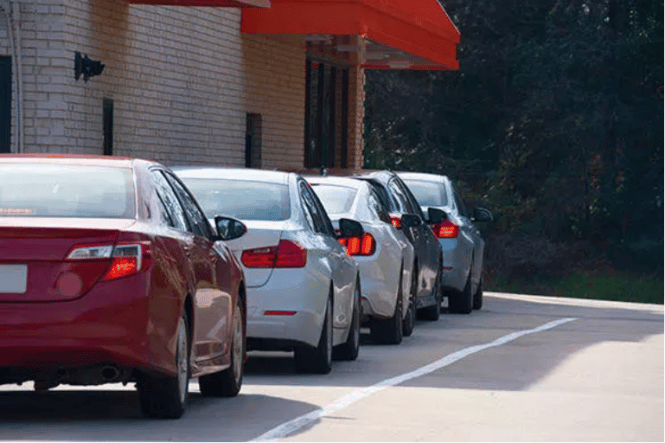
Drive-Thru Evolution Whitepaper

panasonic connect
Learn the latest drive-thru trends taking place across the restaurant industry that are meeting customers’ needs while increasing operators’ revenues. For more information, you can email info@kioskindustry.org
Executive Summary
Once considered an adjunct to an established restaurant, the drive-thru has evolved into an essential business component helping eateries achieve profitability and exceed customer expectations. Drive-thrus are illustrative of a case where technology has helped redefine the dining experience. QSR Magazine cites examples of national chain restaurants that have more than doubled revenues by implementing an effective drive-thru strategy. The drive-thru has become the industry’s most popular off-premises channel having accounted for fifty-two percent of to-go orders in 2021. This growth activity represents an increase of four percent over the prior year.
Most industry practitioners believe restaurant success depends as much on service quality as it does on food quality. The speed and coordination in preparation, as well as the wholesomeness of menu items, are critical factors. Consumers have always sought speed and accuracy with a drive-thru order, but pandemic circumstances amplified guest expectations to include personalization and concise communications. From a drive-thru perspective, clear communications, accurate order entry, and secure payment processing are core technical elements for an effective operation. It is estimated that the average American will spend more than $1,200 on drive-thru food this year. This sum represents a substantial annual increase attributable to the restrictions of the pandemic.
Simply stated, drive-thru’s have become the restaurant industry’s most popular off-premises channel, accounting for more than half of all to-go orders in 2021, according to industry researcher NPD. This business volume represents an increase of four percent over the prior year. During the pandemic, restaurant takeout orders experienced exponential growth. As a result, operators need to continue supporting a multiple-channel approach to off-premises dining that also includes delivery services and order-ahead options, including mobile apps.
According to QSR Magazine, no area has seen more digital improvements than the restaurant drive-thru. Many industry practitioners claim the pandemic made the drive-thru an essential part of keeping restaurants open during lockdowns. It was the sole way to serve customers at eateries across the country continuously. To thrive amid elevated off-premises demand, restaurants have begun investing in innovations designed to maximize delivery, curbside pickup, and drive-thru offerings. These plans for futuristic store models include digitally integrated double and triple drive-thru’s to accommodate mobile orders better, and take out, with reduced on-premises dining room space. For example, consider the two-story Taco Bell in Brooklyn Park, Minnesota that according to tacobell.com was developed featuring four drive-thru lanes, including three lanes designated for mobile or delivery order pickups. The fourth lane will offer a traditional drive-thru experience with face-to-face interaction between customers and staff.
Download the full whitepaper here (9 pages) — DRIVE THRU IFBTA Panasonic May2022
Authors
Michael L. Kasavana, Ph.D., CHTP, CFTP
MSU/NAMA Professor, Emeritus
IFBTA Education
and
Amy Fanale
Sr. Product Manager
Panasonic Connect North America
More Posts
- Menu Boards White paper by Panasonic(Opens in a new browser tab)
- Panasonic Digital Signage Solution (Complete Solution)(Opens in a new browser tab)
More Posts on Kiosk Industry
- Transformation of the Drive-Thru – Whitepaper(Opens in a new browser tab)
- 5 Key Learnings from Panera’s Digital Transformation Blaine Hurst(Opens in a new browser tab)
- Load Balancing (ie Drive-Thrus Drive People Away)
- Wrap – Four Lane Drive-Thru Taco Bell Defy (with kiosk)
- Legal News — McDonalds Sued for Improper Use of AI Biometric Data in Drive-Thru
Menu Boards White paper by Panasonic
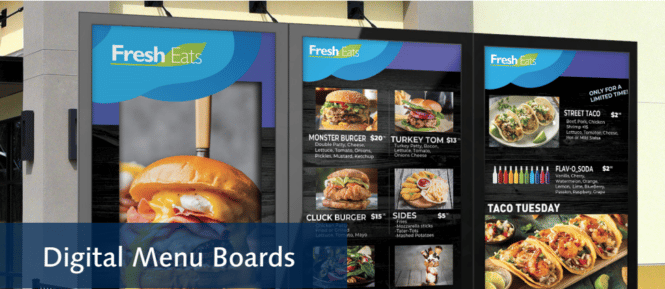
Menu Board Whitepaper
panasonic connect
There is a significant shift in restaurant technology that can engage customers in a way that enhances service, reduces wait times, and increases sales. Digital signage is the technology that powers dynamic menu boards and enables cost-effective influential decision-making at preliminary and point-of-purchase touchpoints.
Excerpt
Executive Summary
There is a significant shift in restaurant technology that can engage customers in a way that enhances service, reduces wait times, and increases sales. Digital signage is the technology that powers dynamic menu boards and enables cost-effective influential decision-making at preliminary and point-of-purchase touchpoints.
It can:
- empower restaurants with digital menu boards
- queue management techniques
- streaming entertainment
- and impactful marketing campaigns to increase sales.
This is why 74% of QSRs ranked digital menu boards as a top priority.
Post-pandemic changes in restaurant design, are creating challenges in customer communications in the absence of face-to-face interaction. According to a recent survey conducted by Panasonic, 100% of food service operators found that the COVID-19 pandemic intensified a sense of urgency to adopt transformational technology.
As the foodservice industry experiences challenges with labor and an increase in customer preferences for touchless options, adopting digital technology appears to be even more important. In addition, the evolution of the drive-thru has also underscored the importance of digital signage and customer engagement. Restaurant operators are seeking way to elevate revenues and further enhance the customer experience with digital signage.
The Menu Board
Menu boards have existed for more than forty-five years. The menu boards were initially very simple with copy listing the menu items and their prices printed on a sheet of paper or plastic installed in a lightbox. Some boards were illuminated but no product photography was included. Since restaurants in the 1970s did not offer as many menu items as currently featured, boards were generally smaller in design.
When the need to change items or prices arose, the item insert was removed and replaced with a new strip. Similarly, price chips were updated. Since a menu item was printed on a strip of plastic that slid into tracks, and price chips snapped into place, changes required some dexterity but not altering the entire panel. Static menu boards for drive-thrus also were invented and installed in the 1970s.
The introduction of drive-thru service brought about the addition of outside menu boards and an accompanying communication system. During the next decade, operators learned that photography of menu items increased sales. This led to a space challenge as eateries increased the number of items on the menu and needed room for photos.
These increases in food offerings and photos rendered the board space insufficient. In the 1990s, the introduction of dayparts led to the need for a way to change the content completely to shift from breakfast to lunch to dinner menus. To accommodate daypart changes, meal panels would either be slid over one another at various times of the day or turned around, both manual processes and had to take place regardless of the weather conditions. By the early 2000s menu boards advanced to digital and allowed for video and commercial promotions to emanate from the board without having to go outside. The digitization of menu boards has expanded capabilities while positively impacting revenues, at a cost-effective rate.
Download the Enhancing the Impact of Menu Boards Whitepaper and for more information, and you can always email info@kioskindustry.org
More Posts
- Drive Thru Digital Signage Solutions by Panasonic(Opens in a new browser tab)
- Panasonic Digital Signage Solution (Complete Solution)(Opens in a new browser tab)
More Posts on Kiosk Industry
- Digital Menu Boards — Panasonic ClearConnect Restaurant Solutions(Opens in a new browser tab)
- Digital Menu Board Technical Considerations – Indoor & Outdoor(Opens in a new browser tab)
- Digital Menu Board – Everything You Wanted to Know(Opens in a new browser tab)
- Digital Menu Boards — Panasonic ClearConnect™ Restaurant Solutions(Opens in a new browser tab)
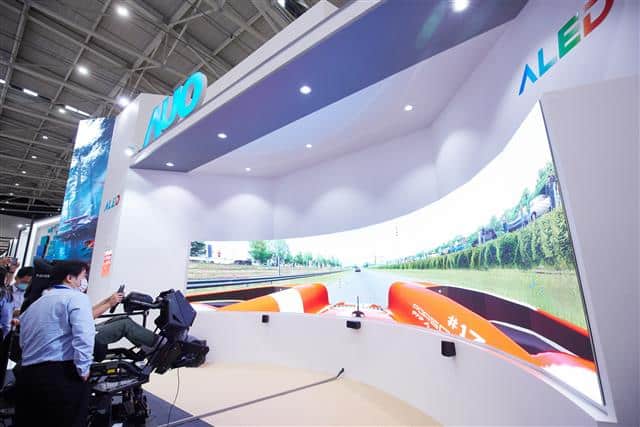
AUO Display Plus Acquires Digital Signage Software Rise Vision
From PRNewswire
Industrial and Commercial Display Solutions Provider Adds Education Focused Digital Signage Software Provider To Broaden Service Offerings
HSINCHU, Sept. 1, 2022 /PRNewswire/ — AUO Display Plus (ADP), a wholly-owned industrial and commercial display subsidiary of Taiwan’s AUO Corporation (TWSE: 2409), has acquired the long-running cloud-based digital signage software company Rise Vision (www.risevision.com), strengthening ADP’s growing portfolio of partners and enabling them to help organizations communicate better using digital signage solutions.
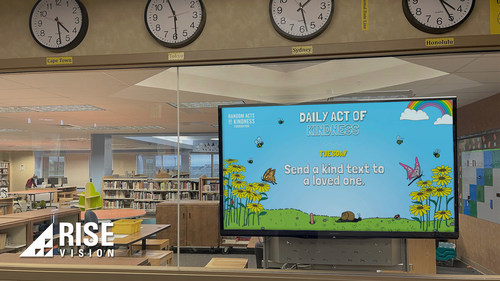
As a leading provider of industrial and commercial displays, ADP expects to bolster its range of smart display solutions with value-added software capabilities and provide customers with more choices and flexibility while extending Rise Vision’s SaaS (Software as Service) business reach to more applications and areas like retail, enterprise and hospitality.
“Rise Vision partners with ADP to provide digital signage solutions that help organizations communicate better,” said Brian Loosbrock, CEO of Rise Vision. “With easy to use software, compatibility with a wide range of hardware, and 500+ professionally designed templates, organizations can be up and running in minutes.”
The acquisition of Rise Vision provides ADP with deeper expertise in the education market and subscription-based SaaS services, tapping into Rise Vision’s expertise to enable a new service for ADP’s worldwide customer base.
“The acquisition of Rise Vision is an important milestone for ADP,” said SH Liao, President of ADP. “The demand for SaaS applications is growing rapidly, and the integration of software and hardware will become a major competitive factor. Rise Vision’s business model can help our customers succeed in their respective vertical markets.
“The partnership will provide us with an opportunity to expand the depth of solutions we can provide in the future,” said Loosbrook. “Rise Vision will continue to provide easy to use software, new templates added each week to save customers hours of content creation time, amazing customer service, and simple, affordable pricing. We’re excited to start this new chapter in our long history with ADP.”
About AUO Display Plus
AUO Display Plus is AUO’s industrial and commercial display subsidiary and offers a complete end-to-end display service, from R&D to sales and customer service. AUO Display Plus integrates its leading display technologies with value-added software solutions for retail, enterprise, education, transportation, and healthcare. AUO Display Plus collaborates with partners in different domains to co-create complete solutions and one stop services that help businesses accelerate their smart transformations and create greater value. Headquartered in the Hsinchu Science Park, Taiwan, AUO Display Plus operates global offices in Mainland China, Japan, the United States, and Europe.
About Rise Vision
Rise Vision is used in 100+ countries, by organizations of all sizes, highly rated, and deeply dedicated since 1992 to making it easy for organizations to communicate better using digital signage. With easy to use software, compatibility with a wide range of hardware, and 500+ professionally designed templates organizations can be up and running in minutes. Rise Vision adds new templates each week saving organizations hours of content creation time allowing them to focus on the message they’re communicating. Rise Vision is based in Ontario, Canada with affiliates in the U.S.
SOURCE AUO Display Plus
More Posts
22Miles Live at Vartech 2022
LG’s Newest Innovations the Talk of the Town at IFA 2022
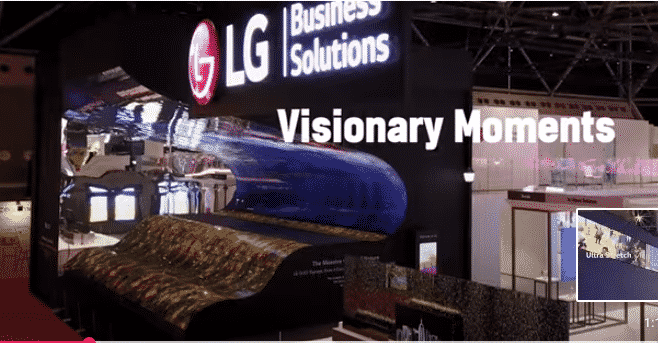
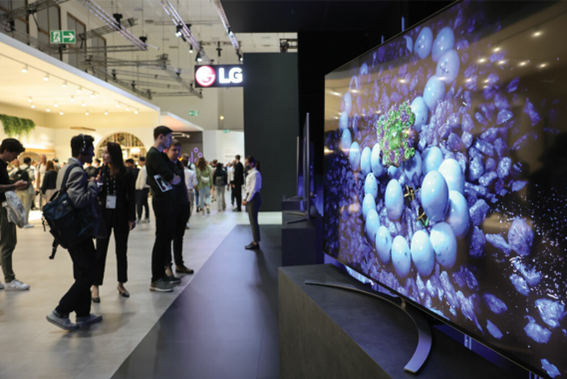
After two long years, IFA 2022 marked the triumphant return of its full-scale format which saw over 240,000 people make their way to Messe Berlin, IFA’s long-term home, between September 1-5.
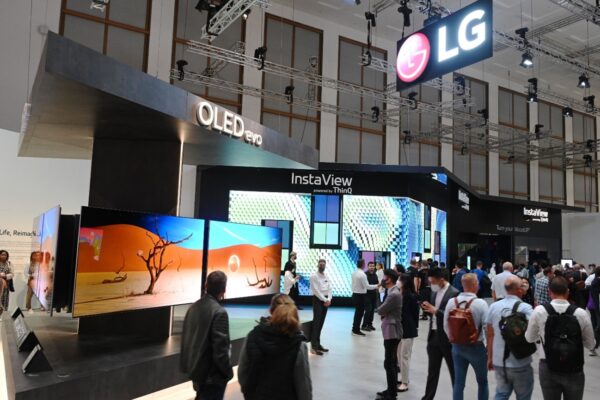
This year, under its theme of ‘Life, Reimagined,’ LG Electronics presented cutting-edge, human-centered innovations that bring new possibilities and experiences to daily life.
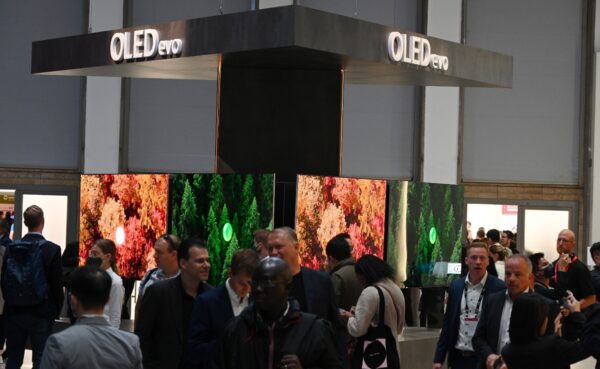
Of the many LG innovations presented at IFA, possibly the first thing to catch the eye of most booth visitors was the 97-inch OLED evo Gallery Edition TV, the world’s largest OLED TV which boasts incredible picture quality thanks to its self-lit panel technology. Other large-screen TVs, such as the 88-inch LG SIGNATURE OLED TV 8K and 136-inch 4K Micro LED, yet again proved LG’s excellence in the TV sphere on a truly global stage.
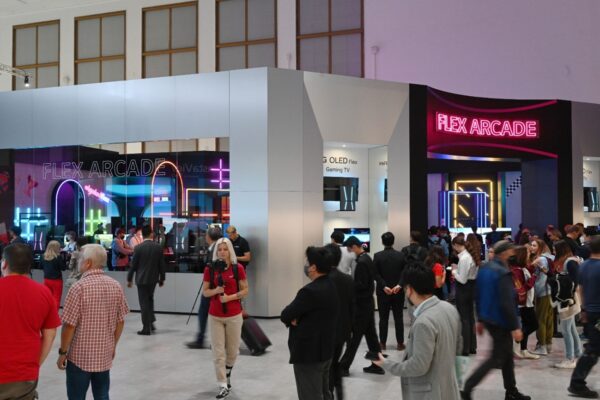
Attracting a lot of attention, especially among gamers, was the Flex Arcade Zone which featured several gaming stations for visitors to experience the new LG OLED Flex (model LX3). The world’s first flexible 42-inch OLED TV, LX3’s display transforms from completely flat to curved so users can choose their ideal arc from twenty levels of curvature. Users can also easily switch screen curvature between two presets using the remote’s dedicated button for an even more effortless user experience.
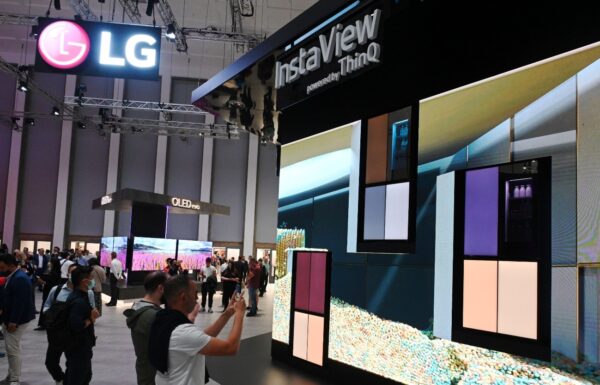
LG also presented its latest home appliances, with the new MoodUP™ refrigerator with color-changing LED door panels the company’s showstopper. Thanks to its innovative LED door panels, the all-new refrigerator delivers unrivaled design flexibility with 22 upper door colors and 19 lower door colors to mix and match. With the MicroLED screen in the background displaying colorful graphics representing the vivid colors of the MoodUP refrigerator, the overall experience was one to remember.
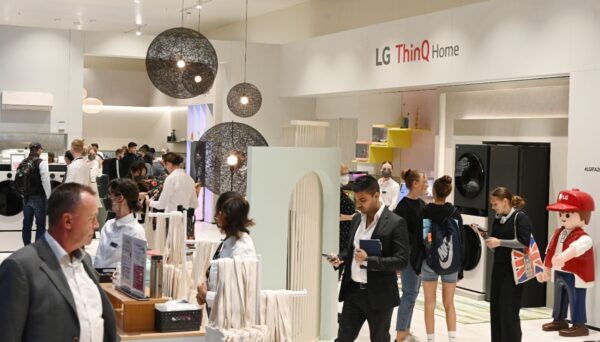
Other LG ThinQ-enabled appliances made their way to Berlin as well, like the new LG PuriCare Aero Furniture, LG Washtower, LG Styler™ ShoeCase and ShoeCare. This space was dedicated to showing how LG appliances come together through ThinQ to create the completely connected home of the future.
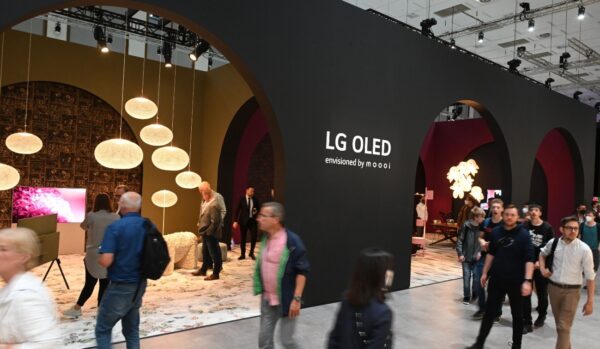
With its theme being “Life, Reimagined,” the company couldn’t leave out its lifestyle TVs. With a zone set around the living room and bedroom, the LG OLED Objet Collection demonstrated how its TVs are able to harmonize with any décor with relative ease.
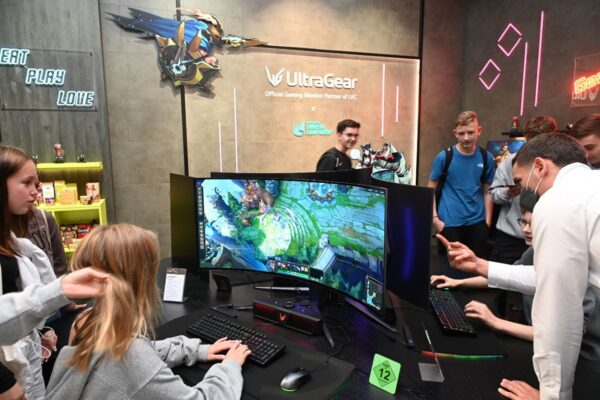
Finally, LG’s cutting-edge monitors were also put in the spotlight, including the new 42-inch UltraGear™ OLED gaming monitor which is its first curved OLED display with a 240Hz refresh rate. Here, visitors could play popular games and experience the perfect gaming sidekick for themselves, offering the performance, speed and features today’s avid gamers demand.
IFA was the perfect place to experience LG’s products and services that bring more convenience and enjoyment in person. Going forward, LG strives to deliver human-centered innovation with various smart life solutions designed to meet the needs and tastes of consumers in a changing world.
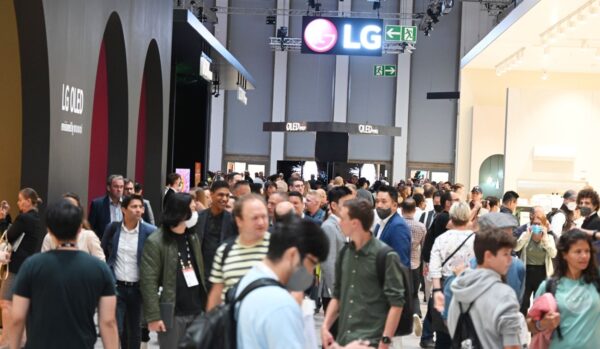
While LG was definitely a star player at IFA this year, many other manufacturers were also present to introduce their newest innovations. One reoccurring trend that has stood out at almost every major tech tradeshow over the last ten years is ‘Smart Home Technology’. Once again, smart home tech headlined IFA as people’s lives have become more ‘home-centric’ since the global pandemic and as more companies commit to Matter – a new smart home connectivity standard created by the Connectivity Standards Alliance (the Alliance) and supported by major companies including Google, Amazon and Apple.
Another obvious trend at IFA was artificial intelligence (AI), which is developing rapidly to become the heart of many gadgets and services we use every day. AI is now automating our indoor environments, predicting our needs based on our usage patterns, delivering helpful time- and situation-specific reminders and making suggestions for improving or extending usability. From health to home entertainment, AI was present in practically every product and tech category of this year’s IFA.
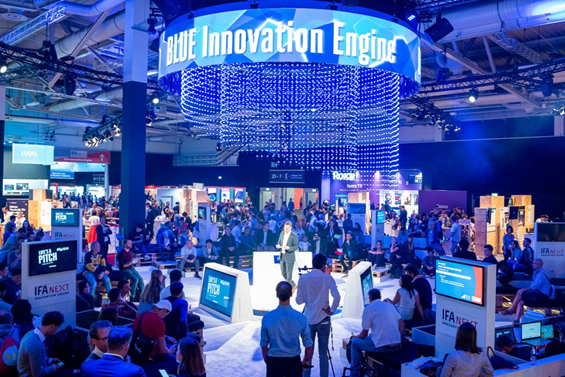 Photo credit: IFA Berlin
And, with many manufacturers prioritizing sustainable consumer tech to reduce their environmental impact and pave the way to a brighter future, sustainability was another key IFA theme. More popular than ever, eco-friendly products that use less energy, employ reused materials and minimize harmful emissions while offering easy repair-ability and recyclability are here to stay.
So, with IFA 2022 done and over with, stay tuned to discover what new innovations LG has in store!
# # #
AV Standards — AVIXA Releases New Image System Contrast Ratio Standard
FOR IMMEDIATE RELEASE
PRESS CONTACT:
Krystle Murphy, Communications Manager, AVIXA
Email: kmurphy@avixa.org
Phone: +1.703.279.6366
AVIXA Releases New Image System Contrast Ratio Standard
Discover How Applying This Standard Takes AV Systems to their Peak Performance in Oct. 12 Webinar
FAIRFAX, VA – Sept. 22, 2022 – AVIXA, the Audiovisual and Integrated Experience Association, is pleased to announce the release of its standard Image System Contrast Ratio (ISCR). This standard defines acceptable minimum contrast ratios for AV presentation systems relative to their stated purpose or application.
“Presentation technology has fundamentally changed since the original PISCR (Projected Image System Contrast Ratio) standard was released,” said Jonathan Brawn, CTS, Principal, Brawn Consulting, and co-chair of this standard’s task group. “Previously, while direct-view displays were a strong part of the industry, projection-based display technology still influenced the majority of large format installations at that time. Today, direct-view technologies like very large format LCD, LCD videowalls, and increasingly, DVLED have not only maintained being mainstream but are now the dominant technology in most instances. This drove a true need to update the original PISCR standard to reflect current technology.”
This standard replaces the PISCR standard published in 2011, which applied to projection only. As direct-view displays became more prevalent, AVIXA assembled a task group to assess the technological characteristics of direct-view displays to determine whether the differences in technologies would affect how image system contrast was assessed.
The task group concluded that the measurement used in the original PISCR standard was equally appropriate for direct view displays. However, the addition of sequential (also called full on/off or inter-frame) testing was deemed necessary to accurately characterize the image system’s contrast for any technology. Sequential testing enables AV professionals to effectively measure high-performance display technologies that can create high contrast ratios in a wider range of environments.
The new ISCR standard is designed to facilitate informed decision-making for projector, screen, and direct view display selection relative to location and stated purpose. Additionally, the metrics (the contrast ratios) and classifications (the viewing categories) in this standard may be used to establish design criteria for new systems. Requirements of this standard apply to:
- Planning and designing image system installations
- Setting minimum and optimum contrast ratios relative to stated purposes
- Testing and signing off on completed image system installations
- Determining remedial solutions for a system not conforming with this standard or inadequate for the stated purpose.
The standard’s four contrast ratios are based on the following content viewing requirements:
- Passive Viewing
- Basic Decision Making
- Analytical Decision Making
- Full Motion Video
“This standard helps our industry to address our customers’ needs,” Justin Watts, CTS, Senior AV Design Engineer, and co-chair of this standard’s task group. “In new systems, we can deliver a superior experience by providing display solutions that meet or exceed the performance requirements for the core applications we represent. It’s also a powerful tool for existing systems, where we can evaluate their performance and provide sometimes needed justification for updates, upgrades, or changes to environment to maximize investments.”
To learn more, register for the webinar “Leveraging the AVIXA Image System Contrast Ratio (ISCR) Standard” led by Jonathan Brawn and Justin Watts taking place Oct. 12 at 1 p.m. EDT.
Visit www.avixa.org/standards/image-
Video: ISCR Standard: The Four Viewing Categories
Image: Four Viewing Categories
AVIXA is an ANSI-accredited Standards Development Organization (SDO). The work of preparing standards is carried out through AVIXA Task Groups with oversight by the AVIXA Standards Steering Committee and governed by the AVIXA Board of Directors.
About AVIXA
AVIXA is the Audiovisual and Integrated Experience Association, producer of InfoComm trade shows around the world, co-owner of Integrated Systems Europe, and the international trade association representing the audiovisual industry. Established in 1939, AVIXA has more than 20,000 enterprise and individual members, including manufacturers, systems integrators, dealers and distributors, consultants, programmers, live events companies, technology managers, content producers, and multimedia professionals from more than 80 countries. AVIXA members create integrated AV experiences that deliver outcomes for end users. AVIXA is a hub for professional collaboration, information, and community and is the leading resource for AV standards, certification, training, market intelligence, and thought leadership. Visit avixa.org.
More Posts
- What is WCAG – WCAG Checklist for 2.1(Opens in a new browser tab)
- How Your Company To Prevent ADA Website Accessibility Lawsuits(Opens in a new browser tab)
- WCAG 3.0 Working Draft Released by W3C(Opens in a new browser tab)
- Assistive Technology – AudioNav and US Access Board Webinar(Opens in a new browser tab)
Sitekiosk – Digital Signage CMS Made Easy

Digital Signage CMS News
Sitekiosk has launched a new, redesigned website that features a new Cloud-based software solution for content management on kiosks and interactive displays. From sitekiosk.com — For more information, you can email sales-america@sitekiosk.com, or call +1 (305) 974-1952, or you can email info@kioskindustry.org.
SiteKiosk Online – Introduction from SiteKiosk on Vimeo.
SiteKiosk secures and manages thousands of machines for a myriad of functionality in kiosk and self-service markets worldwide. Fortune 500 companies like Hilton Hotels, BMW, and Citibank come to mind. The protection of machines in public locations has been the company’s focus from the start as outlined in a website slider: “SiteKiosk is the easy-to-use all-in-one kiosk solution for displays, tablets and terminals in public access areas as well as business networks. Protect, manage and realize your project on just one platform for kiosk clients with Windows and/or Android operating systems.”
With the release of the new product named SiteKiosk.Online, the company made a big step into the field of content creation and management for kiosks, public computers as well as any interactive display powered by Windows or Android. The new product is an All-in-One kiosk and digital signage software that allows administrators to work on all aspects of their kiosks and digital signage deployment including the protection of devices and the publishing of multi-media campaigns using the newly integrated CMS.
The new website offers numerous video tutorials, especially for the redesigned CMS solution and free 30 day trial accounts at https://www.sitekiosk.online/
Deployments:
- Kiosks and public computers. Nobody has anywhere near the number of licenses for kiosk software deployed than Sitekiosk, by a factor of 5X. Besides its browser lockdown and other security features the management and monitoring features are critical not only for large nationwide deployments but projects of any size.
- Interactive Displays. SiteKiosk’s Cloud-based management console also provides a content management solution to create engaging interactive user interfaces and multi-media content that can be published to remote POS devices, displays, and other devices.
Securely Robust
Sitekiosk has been tested and chosen by many large international companies including well-known banks. IT rests a little easier knowing that. Some examples of banks and financial institutions that trust and use Sitekiosk to protect their online banking devices and displays: BMW Financial Services, Ahold Financial Services, FIRSTBANK Virgin Islands, National Bank of Austria, City National Bank, National Bank of Denmark, HypoVereinsbank, Bank of Oklahoma, Norris Bank, Commerzbank AG, Deutsche Postbank AG, Dresdner Bank AG, A/S HansaBanka, Aargauer Kantonalbank, CAIXA GALICIA, Aruba Bank N.V., Berner Kantonalbank, Danmarks Nationalbank, Foroya Banki and Santander.
Summary in Brief
- Free 30 day trial is easy to get. No credit card required.
- Excellent language support.
- Very robust kiosk software with cloud CMS which lets you do digital signage out of the box with pre-built templates that are easily modified.
- If you want powerful, easy-to-use kiosk software with integrated CMS you can have it.
- You can configure a range of self-service kiosks and interactive displays, all at the same time. One size rarely fits all and being able to manage conditional properties and variations is a huge time saver.
- Historically a platform with APIs, hooks, and object model, it still has all of those but has added higher-level applications and templates
- Custom-developed solutions are available like a QSR ordering app
- Sitekiosk has numerous Sitekiosk Case Studies as well as tutorial videos. There are 12 different tutorials including start from scratch digital signage — A digital signage project, completely without template is easily implemented in a few steps!
Contact info — sales-america@sitekiosk.com, +1 (305) 974-1952
More Posts
Video of Latest Starbucks..oops I mean 7-Eleven Digital Menus
7-Eleven Digital Menu Store Format
For more on C-Stores see article we did for AVIXA
In other news
Layoffs — 7-Eleven has pinned the overarching reason for the layoffs on their acquisition of Speedway. The company asserted that as with any merger or acquisition oftentimes layoffs and reorganization efforts are necessary. “We are just over a year into our integration process following the $21 billion Speedway acquisition and, as with any integration, our approach included assessing our combined organization structure,” said a 7-Eleven spokesperson. They also attributed letting go of 880 top executives in one fell swoop to the fact that they had delayed laying off anyone during the height of the pandemic. Thus, in a sense, they were playing catch up with the number of people they needed to let go. Not that that would inspire much confidence in anyone currently still working for the conglomerate.
Regardless of the company’s reasoning and defense of its actions, 880 people were still left blindsiding and without work. As a result, the morale of those left has been utterly decimated. “They said, ‘This is no longer 7-Eleven, this is 9/11. The people who are left here are just walking around in shock, and there’s still dust in the air,” an employee in the thick of it admitted.
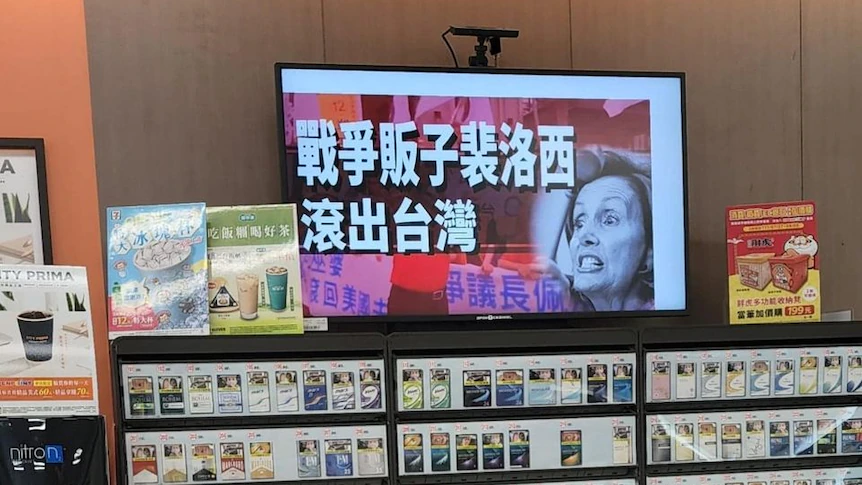
SOME 6,000 7-ELEVENS MAY HAVE HAD DIGITAL SIGNS HACKED IN LAST WEEK’S TAIWAN CYBER ATTACK: REPORT
August 9, 2022 by Dave Haynes
Whoa … the details either weren’t out or I missed the part in the first reports I saw that it wasn’t a few 7-Elevens with screens that got hacked with anti-US messaging last week, when US Speaker Nancy Pelosi made an official visit to that island nation.
It may have been as many as screens in some 6,000 stores.
When the politician made her visit a week ago reports started popping up about screens being compromised with vitriolic messaging that slammed and insulted Pelosi, with the Chinese government suspected of being behind the hacks.
More Posts
- Accessibility and Digital Menus For Restaurants(Opens in a new browser tab)
- Amazon Digital Signage – Appears to Be Matter of Time(Opens in a new browser tab)
- Retail Digital Signage Trend – Online Shopping Coming To Physical Stores(Opens in a new browser tab)